Seamlessly scale from prototype to production with quality CNC machining services
With in-house capabilities and a trusted global network, we provide expert CNC machining support at every stage.

 ITAR Registered
 ISO 9001:2015





With in-house capabilities and a trusted global network, we provide expert CNC machining support at every stage.
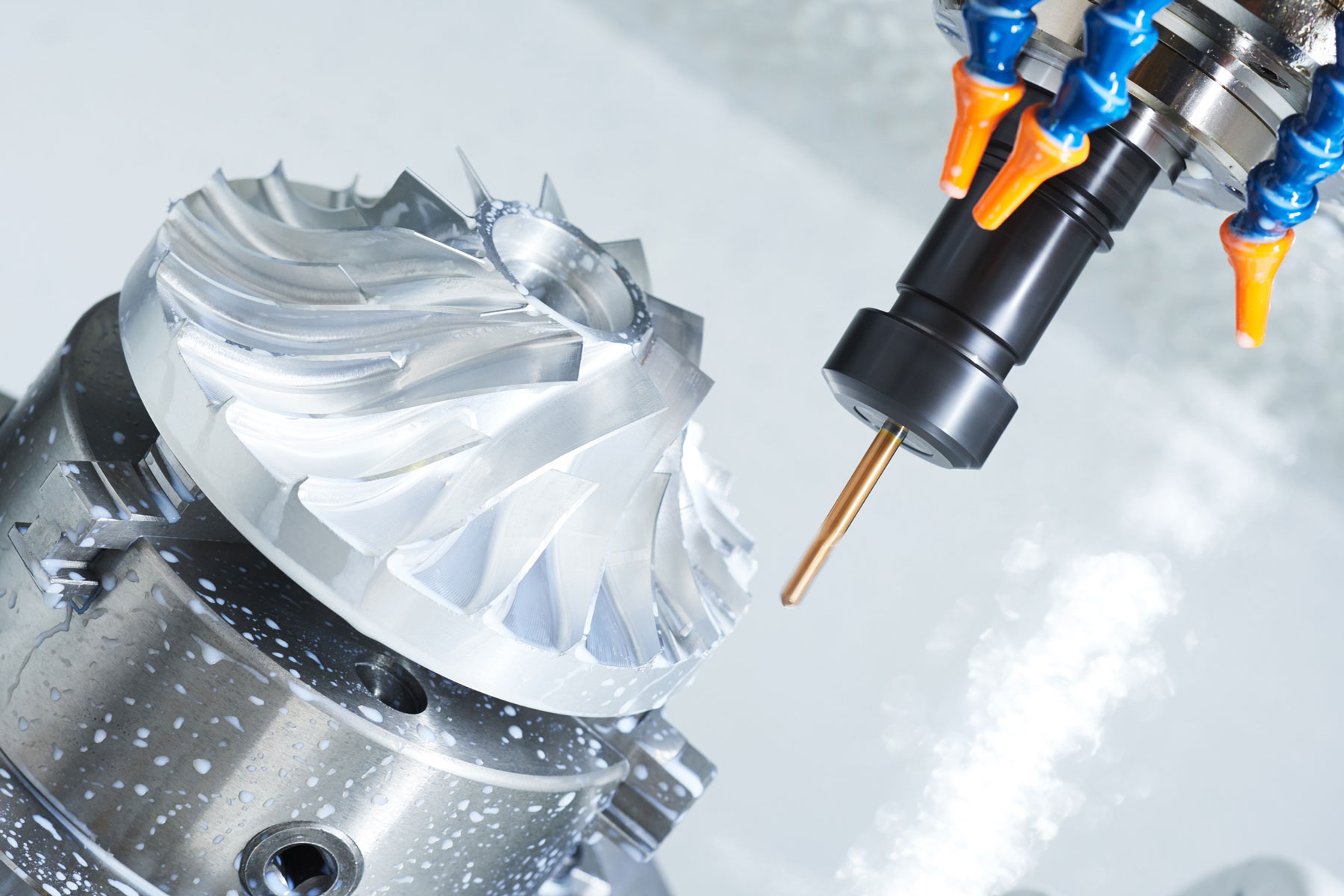
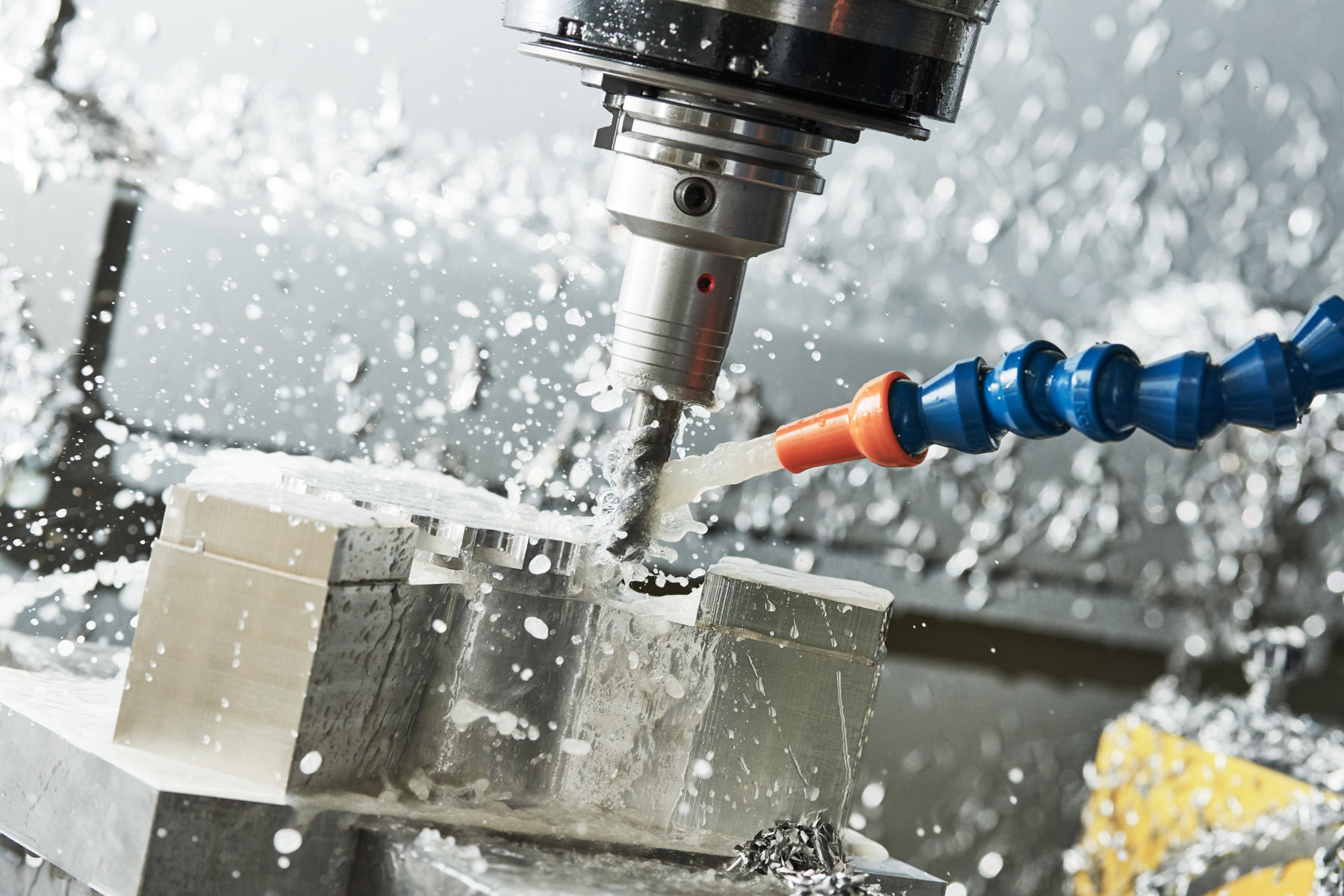
CNC (computer numerical control) machining is a manufacturing process where a machine uses computer instructions to cut parts out of solid blocks of material like metal or plastic. You can think of it as a robotic tool moving with incredible precision, carving your part from a solid chunk the way a sculptor would, but much faster and more accurately.
These machines can move and cut in different directions depending on how complex the part needs to be:
3-axis machines move side-to-side (X), front-to-back (Y), and up-and-down (Z). These are great for simpler shapes and flat surfaces.
4-axis machines add rotation so the part can spin while it’s being cut. This helps cut around cylindrical objects.
5-axis machines can tilt and rotate both the cutting tool and the material. This makes it possible to cut complex angles and detailed geometries in a single setup.
This process is fully automated, which means once the instructions are loaded, the machine can make part after part with incredible consistency. CNC machining works with a wide range of materials and is used to make everything from car parts and aerospace components to medical tools, electronics, and custom prototypes.
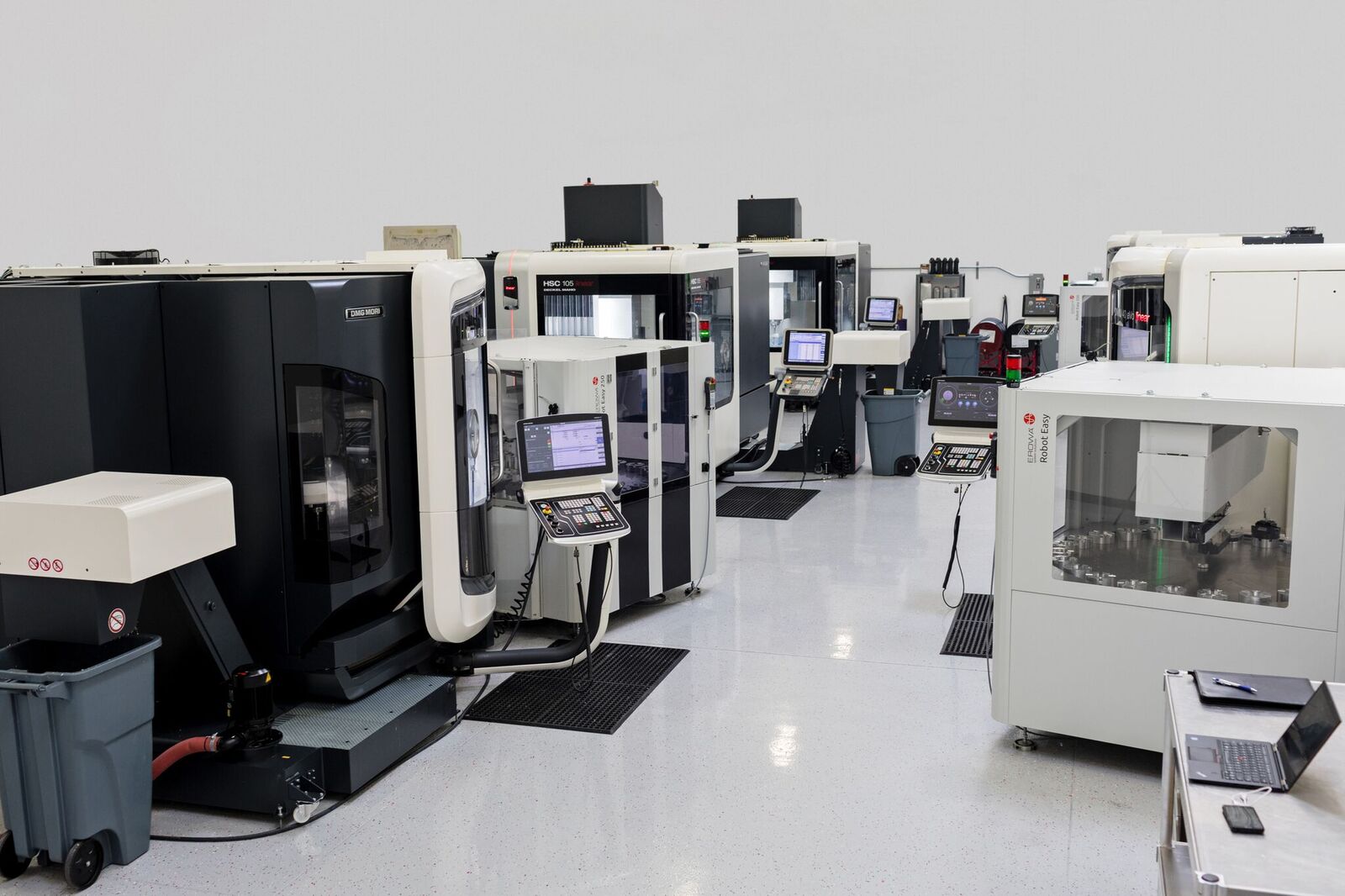
3 and 5-axis machining with tolerances to ±0.001”
Get pricing in seconds with our updated customer portal, QuickQuote®
supporting you from prototyping to low, mid and high volume manufacturing
Our standard ‘design for manufacturing’ review helps to mitigate potential issues, ensuring your parts meet your expectations
Over 35 years of industry expertise. Our skilled CNC operators have an average of 10 years experience
More than 4000 satisfied customers
Here’s a selection of some of our popular metal materials. There are many more available depending on your application and project requirements, but these represent some of the most commonly requested and versatile options.
Here’s a selection of some of our popular plastic materials. There are many more available depending on your application and project requirements, but these represent some of the most commonly requested and versatile options.
We offer many finish options to meet functional, cosmetic, or performance requirements. For CNC-machined parts, common finishes include:
We also offer custom finishes upon request.
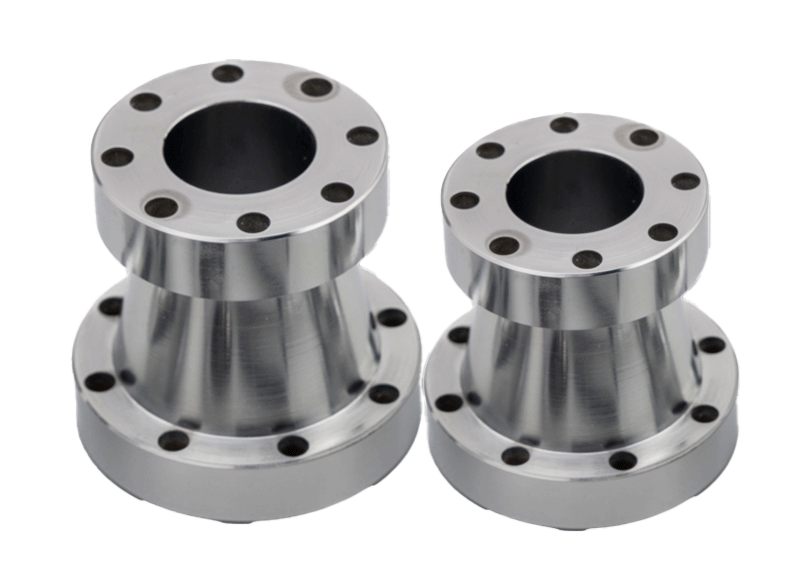
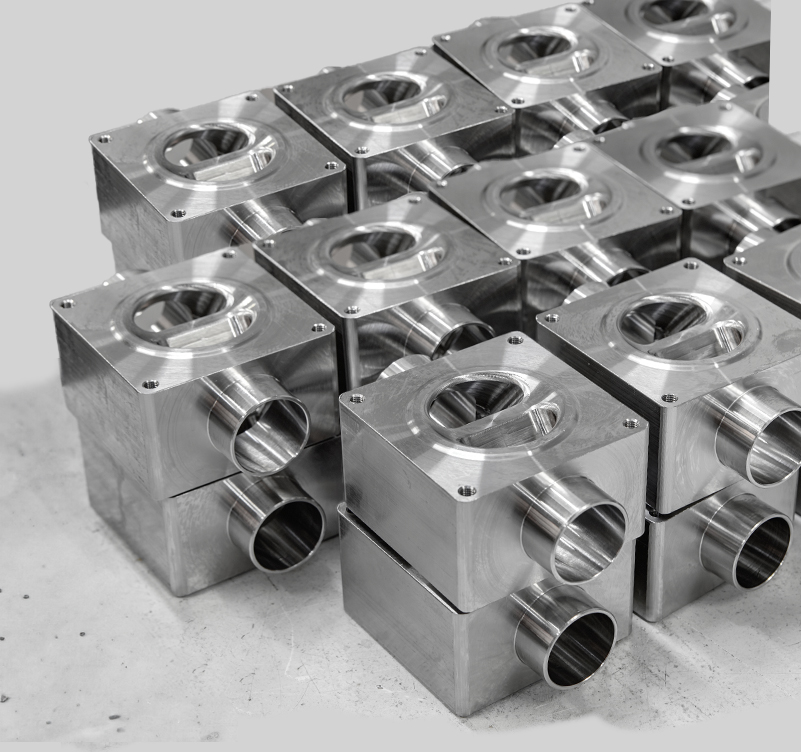
Quickparts offers a range of CNC services, including milling and turning.
Aerospace: Precision-machined structural parts, engine components, and avionics housings that demand tight tolerances and high-performance materials.
Automotive: Powertrain and drivetrain components, custom tooling, performance parts, and EV battery/cooling hardware for production and prototyping.
Medical: Biocompatible implants, surgical instruments, diagnostic equipment parts, and rapid-iteration prototypes for regulated medical devices.
Robotics & Automation: High-accuracy brackets, gears, end-effectors, and mechanical assemblies used in robotic systems and automated production lines.
Electronics: Machined heat sinks, enclosures, precision mounts, and prototype components for consumer electronics and industrial electronics.
Industrial Equipment: Durable parts for pumps, compressors, tooling, and replacement components for heavy machinery and manufacturing systems.
Defense: Ruggedized housings, mounts, optical system components, and mission-critical hardware for demanding military applications.
Energy: High-strength fittings, turbine components, battery and thermal hardware, and precision machined parts for renewable and traditional power sectors.
We support tight tolerances down to ±0.001” using precision 3- and 5-axis CNC equipment. Our CNC capabilities also include:
If you have specific tolerance or dimensional needs, upload your CAD file to QuickQuote® to get instant feedback on what’s possible and how fast we can deliver.
Let us help determine which manufacturing process is right for your project.
At Quickparts, the CNC machining process starts when a CAD file is created to define the part’s shape and dimensions. Then that CAD file is entered into a CNC program that tells the machine how to move.
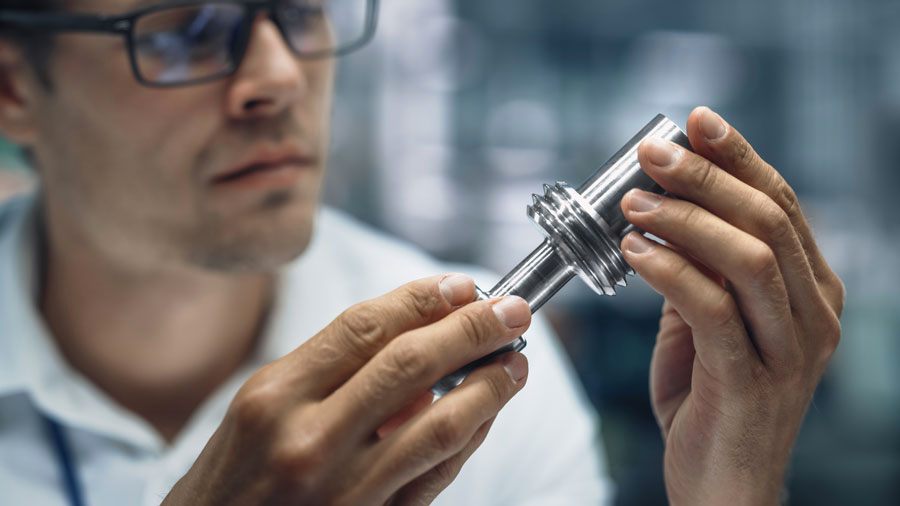
A machinist sets up the block of material and secures it inside the CNC machine. The machine uses cutting tools like mills or lathes to remove material according to the program. From there, optional surface treatments, polishing, or other finishing processes are applied. The final part is measured and inspected to ensure it meets the required specs.
CNC machining is a modern form of traditional machining. It follows the same core principles as cutting raw material into precise shapes, but automates the process using computer programming and highly accurate equipment. Once a machinist programs the machine using digital instructions from a CAD file, the CNC machine controls the cutting tools automatically.
This automation makes CNC machining more consistent across hundreds or thousands of parts, faster for complex designs, and capable of tighter tolerances, often down to ±0.001. At Quickparts, we use CNC machining because it allows us to make your parts better, faster, and more scalable.
What are the advantages and challenges of CNC machining?
Advantages of CNC machining include:
At Quickparts, we can help you overcome CNC machining challenges like:
There isn’t one universal maximum size for CNC-machined parts. It depends on the type of machine, the number of axes, and the vendor’s equipment. Some specialty shops are equipped to handle parts several feet long or wide, while others are optimized for small, highly detailed components.
At Quickparts, our instant quoting platform supports CNC parts up to:
If your part exceeds those dimensions, that’s okay! We work with a broad network of global partners, including facilities equipped for large-format CNC machining. Just reach out with your specs, and we’ll help evaluate your design and match it with the right solution.
What are your tolerances for CNC-machined parts?
We offer 3-axis and 5-axis CNC machining with tolerances as tight as ±0.001 inches, depending on the material, geometry, and surface finish requirements of your part. Before production, our engineering team reviews your design to confirm which tolerances are achievable and whether any areas need adjustments.
Yes! Quickparts specializes in quick-turn CNC machining for both prototypes and low-volume production runs.
We deliver fast turnaround times thanks to our own manufacturing capabilities with a global network of vetted CNC partners. We can match your project with the best-fit facility based on speed, material, complexity, and finish.
Many parts can ship in as little as 3–15 business days, depending on the design requirements. If you’re on a tight timeline, our team can help assess lead times and coordinate delivery options to keep your project moving.
CNC machining began in the 1940s and 1950s, when engineers adapted early punch card systems to automate machine tools. The original machines relied on numerical control, where code was manually input to control the movement of the machine.
By the 1970s, with the rise of computers, CNC became the standard. These machines could now be programmed digitally, which made the process more accurate and repeatable.
Today, CNC machining allows manufacturers to create custom parts at scale with extremely tight tolerances and fast turnaround times.
Ready to log in or register?
Complex needs?
After registering or logging in, here’s what to expect:

To start, select a printing service and upload a 3D CAD file.

We will review your file and send back a full analysis and project pricing. (Within a few hours of file upload.)

Once you approve your order, we’ll start the manufacturing process in 24 hours.

Our process allows us to produce your parts and ship to you fast!