


The global injection molding market was valued at approximately $312.7 billion in 2025 and is projected to reach about $462.5 billion by 2033, underscoring the continued importance of molded plastics across product development and manufacturing.
For engineering and design teams, prototype injection molding provides a way to validate parts in production-representative materials and geometries before committing to higher-cost production tooling. The right manufacturing partner can also help identify moldability issues, refine tooling strategy, and create a clearer path from design validation to ongoing production.
This guide compares 11 prototype injection molding services in the US based on publicly available information about DFM support, tooling and material options, manufacturing capabilities, lead times, certifications, and the ability to support projects beyond the prototype stage.
Whether you’re developing medical devices, industrial equipment, automotive components, or consumer products, the best fit depends on more than turnaround time alone. Engineering support, manufacturing quality, communication, tooling strategy, and production scalability can all have a significant impact on the success of a molding program.
For a broader look at the processes available for prototype and production parts, see the Quickparts on-demand manufacturing services overview.
Key Takeaways
- Prototype injection molding helps teams validate fit, function, material performance, and manufacturability before investing in production tooling.
- Strong prototype injection molding partners combine DFM support, appropriate tooling strategies, production-grade material options, quality controls, and clear communication.
- Lead time matters, but it should be considered alongside tooling life, material requirements, part complexity, quality expectations, and anticipated production volumes.
- For programs expected to scale, look for a manufacturing partner that can support the transition from prototype tooling through bridge and production molding without forcing you to rebuild the process from scratch.
Best Prototype Injection Molding Services: Quick Review
We compared publicly available information from each provider, focusing on factors that commonly influence real-world molding programs: DFM and engineering support, tooling and material flexibility, manufacturing capabilities, certifications, published lead times, and the ability to support increasing production volumes.
The table below is intended as a quick comparison rather than a universal ranking. The best provider will depend on your part geometry, material requirements, quality standards, timeline, production volumes, and how much engineering support your team needs. Blank or “not stated” fields indicate that the company does not clearly publish the information on its official website.
| Service Provider | Fulfillment Model | Average Prototyping Lead Time | Minimum Order Quantity (MOQ) | Best For |
| Quickparts: Best overall | Owned manufacturing facilities in the US and Europe + vetted manufacturing partner network | Select rapid molded parts available in as little as 5 days; lead time varies by tooling program and complexity | No minimum order quantity for applicable prototyping programs | Engineering-supported prototype, bridge, and production molding with flexible manufacturing options |
| Fathom | Hybrid — US in-house (8 sites) + global sourcing (ICOMold) | Rapid tooling with sample parts in as little as 15 days | Not stated | Domestic + overseas molding flexibility that scales prototype to production |
| Fictiv | Managed global manufacturing network (US, Mexico, China) | T1 samples as fast as 10 days; broader injection molding timelines vary by project | No minimum order quantity for applicable tooling options | Online quoting, DFM support, and flexible global sourcing |
| Ironwood Plastics | In-house (US facilities in MI & WI) | Not stated | Not stated | Close-tolerance insert, reel-to-reel, and two-shot molding |
| Murray Plastics | In-house (design, tooling, molding, secondary ops) | Not stated (24-hour production cycle cited) | Not stated | Made-in-USA custom molding, small parts to large components |
| Nicolet Plastics | In-house (two company-owned WI facilities) | Not stated | Not stated | Complex low-to-high-volume industrial/medical molding |
| Plastek Industries | In-house / global (company-owned US, UK, Brazil, Mexico) | Not stated | Not stated | Tooling and injection molding for rigid plastic packaging and higher-volume programs |
| Protolabs | Hybrid — in-house digital factories + Protolabs Network | Parts as fast as 1 day; standard as fast as 7 days | Low-volume from 25 pieces; on-demand with no MOQ | Fast on-demand prototyping and low-volume production |
| Protoshop | In-house (Carlsbad, CA) | Mold in ~1 week; first parts 1–3 days after mold | Not stated (low-volume supported) | Complex-geometry prototype molds with production-quality parts |
| UPTIVE | Hybrid — US in-house facilities + GoProto partner network | Not stated (“prototype to production in just days”) | Not stated | Quick-turn molding scaling prototype through medium/high volume |
| Xometry | Marketplace / global partner network | Typically within 3 weeks; as few as 5 business days | Not stated | Instant-quote on-demand molding, prototype to mass production |
What Is Prototype Injection Molding?
Prototype injection molding is the process of producing relatively small quantities of molded parts using tooling designed for product validation, pre-production, or lower-volume manufacturing.
Prototype tools are often machined from aluminum because it can reduce tooling cost and lead time, although steel may also be appropriate depending on part geometry, resin, expected tool life, and production requirements.
Unlike early-stage additive prototypes, injection-molded prototypes can be produced using the same or similar thermoplastics intended for production. This allows engineering teams to evaluate characteristics such as fit, function, surface finish, assembly performance, and material behavior before committing to a longer-life production tool.
How Does Prototype Injection Molding Work?
Prototype molding follows the same core sequence as production molding, just on a faster, lower-cost tool. Here are the five steps.
- Design: Engineers finalize the 3D CAD model and review it for moldability, adjusting wall thickness, draft, and gate locations.
- Mold Creation: A prototype mold, typically aluminum, is CNC machined to form the cavity that shapes the part.
- Injection: Molten thermoplastic is injected under pressure into the closed mold cavity.
- Cooling: The material cools and solidifies inside the mold, taking on its final shape and dimensions.
- Ejection: The mold opens, and ejector pins release the finished part, and the cycle repeats.
Benefits of Prototype Injection Molding
- Production-representative parts. Prototype molding allows teams to evaluate parts using production-grade thermoplastics and a manufacturing process that closely represents eventual production.
- Earlier manufacturability feedback. DFM analysis and molded-part testing can reveal issues with draft, wall thickness, gating, shrinkage, warpage, assembly, or other design considerations before changes to production tooling become substantially more expensive.
- Lower tooling investment for appropriate applications. Aluminum and other prototype tooling strategies can reduce upfront tooling cost compared with hardened production tooling, particularly when only a limited number of parts are required.
- Faster design validation. Prototype tooling can shorten the path to functional molded parts, helping teams make informed design and manufacturing decisions before moving into larger production programs.
These advantages become especially valuable when a project requires more than simply reproducing a CAD file. An experienced molding partner can help evaluate manufacturability, material requirements, tooling strategy, anticipated volumes, and future production needs before a team commits to the next stage.
Best Injection Molding Prototyping Services
1. Quickparts

Year founded: 1990
Headquarters: Seattle, Washington, USA
Quickparts supports injection molding from early product validation through bridge and production programs. It pairs its own US and European facilities with a vetted global partner network, so it operates as a true manufacturer rather than a broker or upload-and-quote marketplace. Its rapid prototyping combines 3D printing, CNC machining, and rapid injection molding, and it markets prototypes and low quantities with no minimum order quantities. The company is ISO 9001:2015 certified and ITAR registered.
They offer more than 15 stocked materials and can also work with customer-supplied resins. Every project includes a design-for-manufacturing (DFM) review to catch potential issues before tooling begins, which helps reduce rework and cost later in the program. Quickparts is ISO 9001:2015 and ISO 27001:2022 certified, and ITAR registered, so they can support quality-critical and regulated applications.
Injection molding capabilities:
- Steel and aluminum tooling built in-house, from Class 105 quick prototypes to Class 103 production molds.
- Most aluminum prototype tools machined and ready in as little as one week, with free DFM review on file upload.
- Advanced features including undercuts, side actions, insert molding, overmolding, and thin walls.
- Over 30 stocked prototyping materials (ABS, PC-ABS, PP, HDPE, LDPE, various Nylons); customer-supplied material accepted.
Other manufacturing and production services:
- CNC machining: Delivers 3-, 4-, and 5-axis CNC milling and turning with tolerances as tight as ±0.001, suitable for both metal and plastic parts in low- to high-volume runs.
- Additive manufacturing: Supports stereolithography (SLA), selective laser sintering (SLS), direct metal printing (DMP), fused deposition modeling (FDM), and other digital fabrication methods for prototyping and end-use parts.
- Sheet metal fabrication: Includes laser cutting, water jetting, stamping, bending, welding, and finishing processes to produce enclosures and assemblies in aluminum, stainless steel, brass, and titanium.
- Die casting: Provides traditional die casting using both hot‑chamber (zinc) and cold‑chamber (aluminum) methods for small‑ to mid‑sized metal parts with consistent surface quality and dimensional repeatability.
- Cast urethane: Produces cast urethane prototypes and master patterns for investment casting applications, offering support from pattern through low‑volume casting. This is a great solution for low-volume manufacturing of molded parts.
- Rapid prototyping: Supports fast-turn prototypes across multiple manufacturing processes to help validate designs and iterate quickly.
2. Fathom

Year founded: 1969
Location: Hartland, Wisconsin, USA
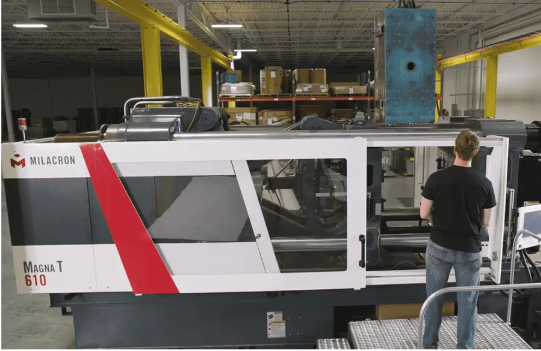
Fathom is a US contract manufacturer offering more than 25 advanced manufacturing technologies across additive, CNC, molding, and metal fabrication. Its molding operation specializes in precision parts for prototyping and production, backed by ISO 9001:2015, ISO 13485:2016, AS9100D, ITAR, and NIST 800-171 credentials.
Injection molding capabilities:
- Tool production and injection molding under one roof, with part and mold design/DFM analysis.
- Rapid tooling produces hardened steel tools with sample parts in as little as 15 days.
- Specialty options: multi-cavity, family molds, insert molding, overmolding, and two-shot molding.
- Three sourcing paths: overseas (ICOMold), US-based, and hybrid export tooling.
Other manufacturing and production services:
- 3D printing (DMLS, FDM, MJF, PolyJet, SLA, SLS), CNC machining, sheet metal, laser and waterjet, cast urethane, extrusion, die casting, and finishing.
3. Fictiv

Location: San Francisco, California
Year founded: 2013
Fictiv operates a managed global manufacturing network that combines digital quoting and project management with access to injection molding suppliers across multiple regions. Its platform provides DFM feedback, tooling management, and sourcing flexibility for projects ranging from prototype quantities to production-scale programs.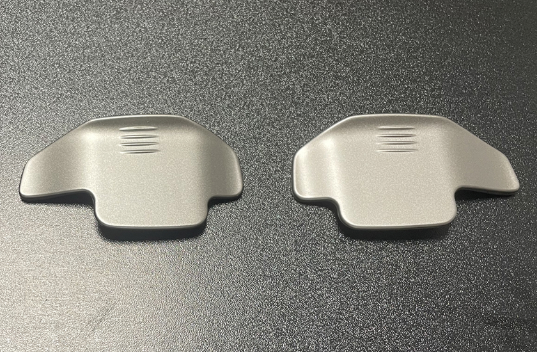
Injection molding capabilities:
- T1 samples available as fast as 10 days for qualifying projects.
- Aluminum and steel tooling options, including Class 101, 102, and 103 production tooling.
- Mold-flow simulation and in-platform tooling management.
- Specialty processes including multi-component molding, liquid silicone rubber molding, compression molding, micro-molding, insert molding, two-shot molding, and overmolding.
- Press sizes ranging from approximately 35 to 3,000 tons.
- Support for prototype quantities through production programs exceeding 1 million parts, depending on project requirements.
Other manufacturing and production services:
- CNC machining, sheet metal fabrication, die casting, 3D printing, urethane casting, welding, and assembly.
4. Ironwood Plastics, Inc

Year founded: 1979
Location: Ironwood, Michigan
Ironwood Plastics is a custom injection molder of close-tolerance plastic products, with a reputation built on the most difficult projects and engineered materials. A subsidiary of CTB, Inc., its management team holds more than 200 years of combined plastics experience, and it uses a data-driven scientific molding approach. Registrations include IATF 16949:2016, ISO 9001:2015, and ITAR compliance.
Injection molding capabilities:
- Two-shot molding of two or more materials in one press cycle.
- Reel-to-reel continuous molding for small, delicate electronic and connector components.
- Insert molding around pre-placed metal inserts.
- Close-tolerance and overmolding for function-critical dimensions.
Other manufacturing and production services:
- Secondary services including pad printing, ultrasonic welding, tape-and-reel packaging, and engineering solutions.
5. Murray Plastics

Year founded: 1998
Location: Gainesville, Georgia, USA
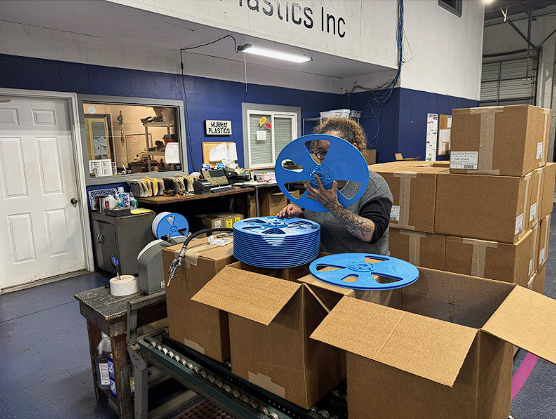
Murray Plastics a custom injection molding company that provides product design, tooling, prototyping, molding, and secondary operations in-house. Its capabilities support projects from early product development through ongoing production, with an emphasis on domestic manufacturing and direct engineering support.
Injection molding capabilities:
- Custom molds built in-house by experienced mold makers.
- CAD part design, Mastercam mold design, and 3D printing for prototyping and design verification.
- Molds from hardened or pre-hardened steel, aluminum, or beryllium-copper alloy.
Other manufacturing and production services:
- Product design, tooling and mold build, secondary operations including mold storage and maintenance, and local delivery.
6. Nicolet Plastics

Year founded: 1986
Location: Mountain, Wisconsin, USA
Nicolet Plastics is a Wisconsin custom molder focused on complex industrial and medical components across two company-owned facilities: a 41,000 sq ft plant in Mountain for low-to-medium runs and a 31,000 sq ft plant in Jackson for medium-to-high volume. It is ISO 9001:2015 certified and was named to Plastics News’ Best Places to Work for 2026.
Injection molding capabilities:
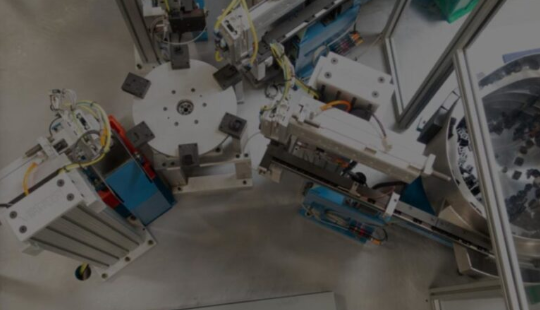
- Low-to-high-volume molding across 46 presses ranging 30 to 610 tons with real-time monitoring.
- Insert molding with specialized automated insert-molding cells.
- Tight-tolerance and micro molding with diverse resins.
Other manufacturing and production services:
- Tooling and prototype support (onshore and offshore), DFM, assembly, pad printing, CNC machining, sonic and vibration welding, heat staking, metal-to-plastic conversion, and additive manufacturing.
7. Plastek Industries

Year founded: 1956
Location: Erie, Pennsylvania, USA
Plastek Industries is a global injection molding and tooling manufacturer with a strong focus on rigid plastic packaging and higher-volume production. Its capabilities include in-house mold design and manufacturing, multi-shot molding, high-cavitation tooling, and prototype support through additive manufacturing.
While Plastek is less specialized in rapid prototype injection molding than some providers on this list, it may be relevant for teams developing packaging or molded products that are expected to move into larger production volumes.
Injection molding capabilities:
- Custom molding via injection and injection stretch molding for high-volume orders.
- Multi-shot machines 90–950 tons, all-electric machines, high-cavitation and stack molds.
- In-house mold design, DFM/engineering reviews, and production tooling.
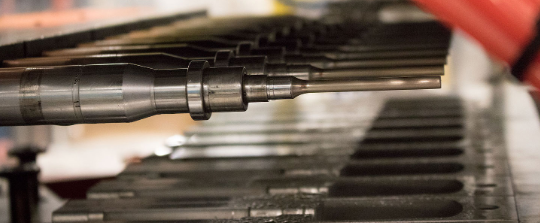
- On-site Stratasys 3D printing to build prototype molds for “samples in hours instead of days.”
Other manufacturing and production services:
- Package and industrial design, high-speed and multi-component assembly, sonic welding, 100% auto inspection, decorating, and first article inspection.
8. Protolabs

Year founded: 1999
Location: Maple Plain, Minnesota, USA
Protolabs is a digital manufacturer spanning rapid prototyping to end-use production, backed by automated quoting from customer 3D CAD. It is certified to ISO 9001:2015, ISO 13485:2016, and AS9100D, and is ITAR compliant, serving medical, aerospace, automotive, and electronics customers.

Injection molding capabilities:
- Injection-molded parts as fast as 1 day; standard lead times as fast as 7 days.
- Aluminum tooling with access to more than 100 stocked thermoplastic resins, with customer-supplied materials also supported for applicable projects.
- Quantities of 25 to 10,000+ pieces; mold pricing starting around $1,495 depending on complexity.
- Liquid silicone rubber molding, overmolding, insert molding, and family/multi-cavity molding.
Other manufacturing and production services:
- CNC machining, 3D printing (metal DMLS, SLA, MJF, SLS, PolyJet, FDM), sheet metal, and the Protolabs Network partner marketplace.
9. Protoshop
Year founded: 2021
Location: Carlsbad, California, USA
Protoshop keeps mold fabrication and injection molding under one roof and specializes in cost-effective, rapid prototype molding with “no geometric limitations.” It uses a proprietary method that heats and cools mold cavities for production-like repeatability, and offers a free, collaborative moldability review over Zoom.

Injection molding capabilities:
- Injection molds fabricated in as little as one week; first plastic parts 1–3 days after mold completion.
- Maximum part size up to 8″ x 6″ x 4″; typical tolerance under 0.004″ (0.1 mm).
- Single-cavity prototype molds cut in aluminum capable of 100K+ cycles, run on Arburg production machines.
- Low-volume production batches supported.
Other manufacturing and production services:
- Prototype mold fabrication and tooling, overmolding and insert molding, design assistance and material selection, and inspection services.
10. UPTIVE

Year founded: 2016
Location: Libertyville, Illinois, USA
UPTIVE provides injection tooling and molding through Phoenix Proto Technologies, its division focused on rapid aluminum tooling, bridge production, and production injection molding. The broader UPTIVE platform also provides access to CNC machining, additive manufacturing, sheet metal fabrication, urethane casting, finishing, and additional manufacturing resources.
Injection molding capabilities:
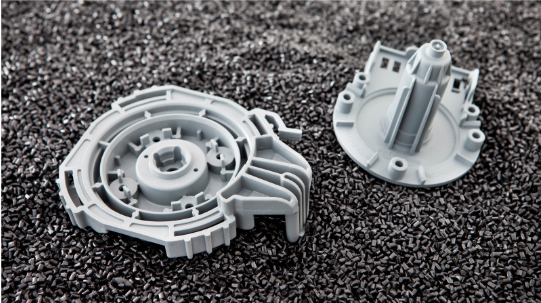
- Prototype molding into a permanent aluminum or steel tool; proprietary aluminum molds reduce cost per part.
- Two-shot and insert-molded parts; rapid, bridge, and production tooling options.
- Custom tooling produced from CAD via machining and EDM.
- High-volume support for medium-to-high runs of 10,000 to 100,000 parts.
Other manufacturing and production services:
- Rapid prototyping, additive manufacturing, CNC machining, sheet metal fabrication, post-processing and finishing, and urethane casting.
Review: No verified third-party review was found for UPTIVE; the testimonials on its site are self-hosted and could not be confirmed on an independent platform.
11. Xometry

Year founded: 2013
Location: North Bethesda / Gaithersburg, Maryland, USA
Xometry operates an AI-powered on-demand manufacturing marketplace with an Instant Quoting Engine that provides pricing, lead time, and DFM feedback, backed by a partner network of over 3,000 manufacturers across all 50 states. Certifications span ISO 9001:2015, ISO 13485, IATF 16949, AS9100D, ITAR, and ISO 7 and 8 medical clean room molding.

Injection molding capabilities:
- Prototype molding typically within 3 weeks, and in as few as 5 business days for qualifying projects.
- Class 105 and 104 molds common for prototyping, CNC-machined from steel or aluminum.
- Prototype, production, bridge tooling, insert, overmolding, and micro molding.
- Domestic and international options; mold ownership stays with the customer.
Other manufacturing and production services:
- CNC machining, 3D printing, sheet and tube fabrication, urethane/silicone casting, die casting, metal stamping, assembly, and finishing.
How to Choose Prototype Injection Molding Services
- End-to-end partnership and transparent communication. Choose a partner that guides you from quote to delivery and keeps you informed at every stage.
- Robust manufacturing analysis. Look for detailed DFM feedback and mold-flow insight that catches issues before tooling.
- Tool ownership. Confirm you retain rights to your mold inserts so you can transfer or scale later.
- Fast lead times and volume scaling. The best providers move from prototype to production without switching vendors.
- Material flexibility. A broad stocked resin library, plus customer-supplied material, keeps you in production-grade plastics.
- Quality assurance, precision, and certifications. ISO and ITAR credentials signal disciplined process control for regulated industries.
- In-house manufacturing. Owning the process, rather than brokering it, tightens control over quality and schedule.
- Long-term fit and DFM support. Pick a partner whose capabilities and engineering guidance match where your product is headed.
Partner With the Best Prototype Injection Molding in the US
Choosing an injection molding service that supports your entire product lifecycle reduces risk and accelerates every stage of development. You want a team that provides engineering input, reliable tooling, transparent inspection standards, and material flexibility so your prototypes match production intent.
Quickparts supports prototype, bridge, and production injection molding with aluminum and steel tooling, production-grade thermoplastics, insert molding, overmolding, and multi-cavity tooling. Qualifying rapid molding projects can deliver parts in as little as five days.
Every QuickQuote includes a DFM review, and projects are supported by Quickparts’ manufacturing facilities in the US and Europe plus a vetted global partner network for added flexibility as production needs scale.
Ready to get started? Get a QuickQuote.
Prototype Injection Molding FAQs
Is PVC Used in Injection Molding?
Yes. Both rigid and flexible PVC can be injection molded and are valued for chemical resistance and durability. PVC is heat-sensitive and can be corrosive to tooling, so it requires careful temperature control and appropriately specified equipment, which is why material guidance from your molder matters.
When Should You Use 3D Printing vs. Injection Molding for Prototyping?
Use 3D printing during early concept development when you need one or a few parts quickly to evaluate form, fit, geometry, or design direction without investing in tooling.
Prototype injection molding becomes more useful when you need production-grade thermoplastics, molded surface characteristics, representative mechanical behavior, or enough parts to conduct functional testing, pilot builds, certifications, or market validation.
The two processes are often complementary rather than competing. A team may use several rounds of 3D printing to refine a design before moving into prototype injection molding once material behavior and manufacturing performance become more important.
What Are the 4 Stages of Injection Molding?
Injection molding is often described using four main stages:
- Clamping: The mold closes and is held together under enough force to withstand injection pressure.
- Injection and packing: Molten resin enters the mold cavity, after which additional pressure helps compensate for material shrinkage as the part begins to cool.
- Cooling: The plastic solidifies inside the tool until the part is stable enough to be removed.
- Ejection: The mold opens and ejector pins or another ejection mechanism release the finished part.
Plasticization—the melting and preparation of resin for the next shot—also occurs as part of the overall molding cycle, typically while the previous part is cooling.
Is Injection Molding Used for Rapid Prototyping?
Yes. Prototype or rapid injection molding uses tooling and manufacturing strategies designed to produce molded parts sooner and with less upfront investment than a conventional high-volume production program.
Aluminum tooling is common because it can be manufactured relatively quickly, although the appropriate tool material depends on the resin, geometry, required quantities, tolerances, surface requirements, and expected tool life.
For teams that need production-representative plastic parts rather than simply visual models, rapid injection molding can provide an important step between early prototypes and full production.