Die Casting Service

Custom Die Casting Services From Prototype to Production

Die casting produces metal parts by injecting molten metal into a precision-machined steel mold under high pressure. The process supports high-volume production while delivering consistent dimensions, fine surface finishes, and repeatable quality:
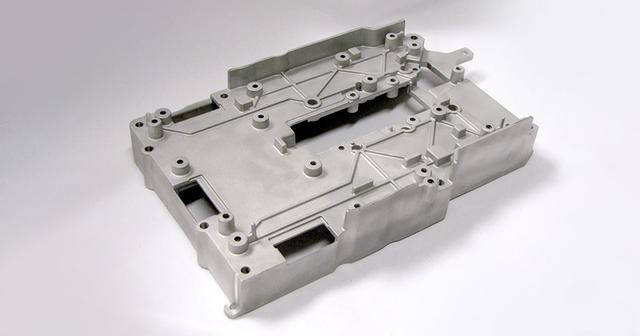
die casted part
  • Die preparation: Engineers create a precision-machined steel mold based on the part design and production requirements.
  • Metal injection: Molten aluminum or zinc is injected into the die cavity under high pressure.
  • Cooling and solidification: The metal cools inside the mold and forms the final part geometry.
  • Part ejection: The finished casting is removed from the die for inspection and finishing.
  • Secondary operations: Parts can be machined, coated, plated, painted, or assembled to meet application requirements.

Quickparts takes care of your project with our integrated manufacturing capabilities, enabling us to rapidly produce any part and deliver your project from prototype to production.

Why Choose Quickparts for Die Casting Services?

01

Fast Delivery

Move from prototype to production with streamlined quoting, engineering support, and global manufacturing capacity. Quickparts helps keep projects on schedule with reliable lead times.

02

Global, In-house Manufacturing

Access a global network of manufacturing facilities backed by consistent quality standards. Our teams support production requirements across regions and industries.

03

35+ Years of Experience

Leverage decades of manufacturing expertise across additive and traditional production processes. Our engineers help optimize designs for manufacturability, quality, and performance.

04

Complete Manufacturing Partnership

Work with a single partner from design review through production and finishing. Quickparts supports every stage of the manufacturing process with engineering guidance and responsive project management.

How Does the Die Casting Process Work at Quickparts?

Quickparts supports both hot chamber and cold chamber die casting for aluminum and zinc components. Our teams guide projects from design review through production, inspection, and delivery.

Die Casting Materials and Finishes

Quickparts offers a range of die casting materials and finishing options to meet performance, durability, and appearance requirements. Our team helps identify the right material, casting process, and finish based on your application, environment, and production goals.

Materials

  • Zinc: Zinc supports hot chamber die casting and produces parts with excellent dimensional accuracy, surface quality, and wear resistance.
  • Aluminum: Aluminum is commonly used in cold chamber die casting for lightweight parts that require strength, corrosion resistance, and thermal performance.

Finishes

  • Painted: Applies color and additional surface protection to meet aesthetic or environmental requirements.
  • Plated: Adds a metallic coating to improve corrosion resistance, durability, or appearance.
  • Polished: Creates a smoother surface finish and enhanced visual appearance.
  • Post machining: Adds precision features, tighter tolerances, or secondary details after casting.
  • Powder-coated: Provides a durable protective finish with improved resistance to wear, corrosion, and weather exposure.
  • Sand blasted: Produces a uniform matte finish and prepares surfaces for additional finishing processes.

Documents and Downloads

Die Casting Industries and Applications

Quickparts supports die casting projects across a range of industries that require durable metal components, repeatable quality, and production-scale manufacturing. Our teams produce precision die-cast parts for both prototype and production applications.

Get Started With Die Casting Your Parts

You’re seconds away from starting your die casting project with Quickparts.

Sign in or register for your free account.

Get a QuickQuote®, order, and receive your quality part quickly.

Connect with an engineer.

We’re standing by to guide you through the most complex challenges.

Die Casting Service FAQs

What is die casting?

Die casting is a manufacturing process that injects molten metal into a precision-machined steel mold under high pressure. The process produces metal parts with consistent dimensions, fine surface finishes, and repeatable quality for prototype and production applications. See our process comparison guide for more information.

What are typical die casting lead times?

Lead times vary based on part complexity, tooling requirements, material selection, and production volume. Quickparts reviews each project and provides lead times based on your design specifications and manufacturing requirements.

What is the difference between die casting and sand casting? Is die casting better than sand casting?

Die casting uses reusable steel molds and high-pressure metal injection to produce parts with tight tolerances, smooth surface finishes, and consistent quality. Sand casting uses disposable sand molds and is often better suited for larger parts, lower production volumes, and simpler geometries.

Neither process is inherently better. Die casting is typically preferred for high-volume production and repeatable precision, while sand casting can be a cost-effective option for larger components and lower-volume projects.

Die casting vs. CNC machining: Which is better?

Die casting and CNC machining serve different manufacturing needs. Die casting is often preferred for higher production volumes because reusable tooling helps reduce per-part costs and maintain consistent quality. CNC machining is well-suited for prototypes, low-volume production, and parts that require complex features or tight tolerances without tooling investment.

What metals are used in die casting?

Common die casting materials include aluminum and zinc, which offer a combination of strength, dimensional accuracy, and production efficiency. Depending on the application, manufacturers may also use magnesium and other non-ferrous alloys to meet specific performance requirements.

Why choose die casting for your project?

Die casting is often used for high-volume production of non-ferrous metal parts that require consistent quality, dimensional accuracy, and repeatable results. The process uses reusable tooling to support efficient production and can create complex geometries with excellent surface finishes. Die casting is commonly selected for industrial, commercial, and consumer applications where production efficiency and part consistency are important.

Is die casting expensive?

Die casting typically requires an upfront tooling investment, which can make it more expensive than some manufacturing processes for low-volume production. However, the reusable tooling and high production rates often reduce per-part costs for medium- and high-volume projects, making die casting a cost-effective option at scale.