


 ITAR Registered
 ISO 9001:2015




Need durable, functional parts with complex geometries? Quickparts’ Selective Laser Sintering (SLS) 3D printing service delivers high-quality prototypes and production parts, quickly and efficiently.
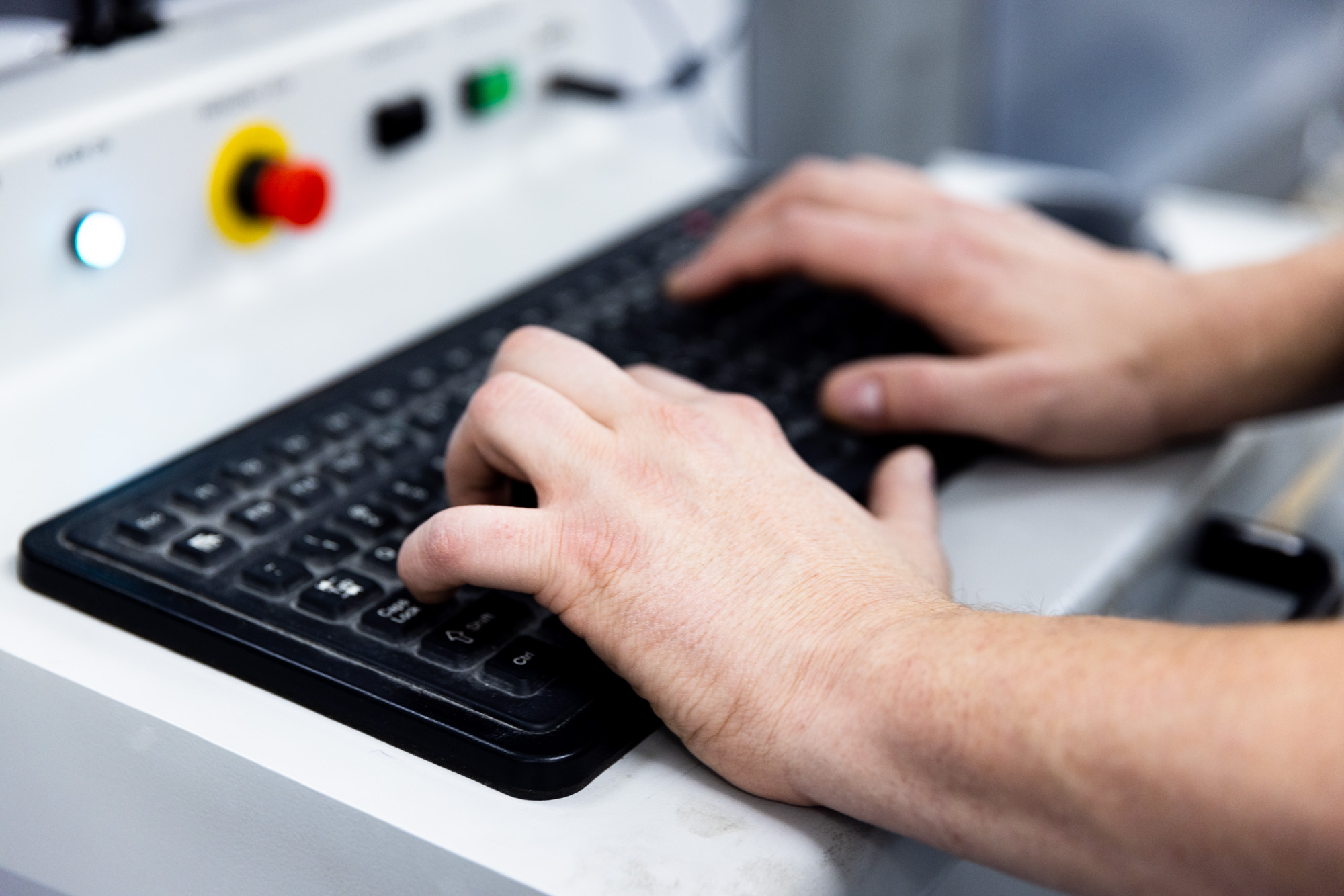
Rapid Prototyping and Production in a Single Day
Experience the speed of creating accurate prototypes and functional production parts in as little as 24 hours. Choose from a variety of nylon-based materials and thermoplastic polyurethane (TPU) to achieve the specific properties your parts require, such as heat resistance, chemical resistance, flexibility, or dimensional stability.
How does Selective Laser Sintering work at Quickparts?
Quickparts simplifies SLS 3D printing from quote to delivery. Our engineers support every stage of the process, from design review and material selection to production and finishing.

Upload your file
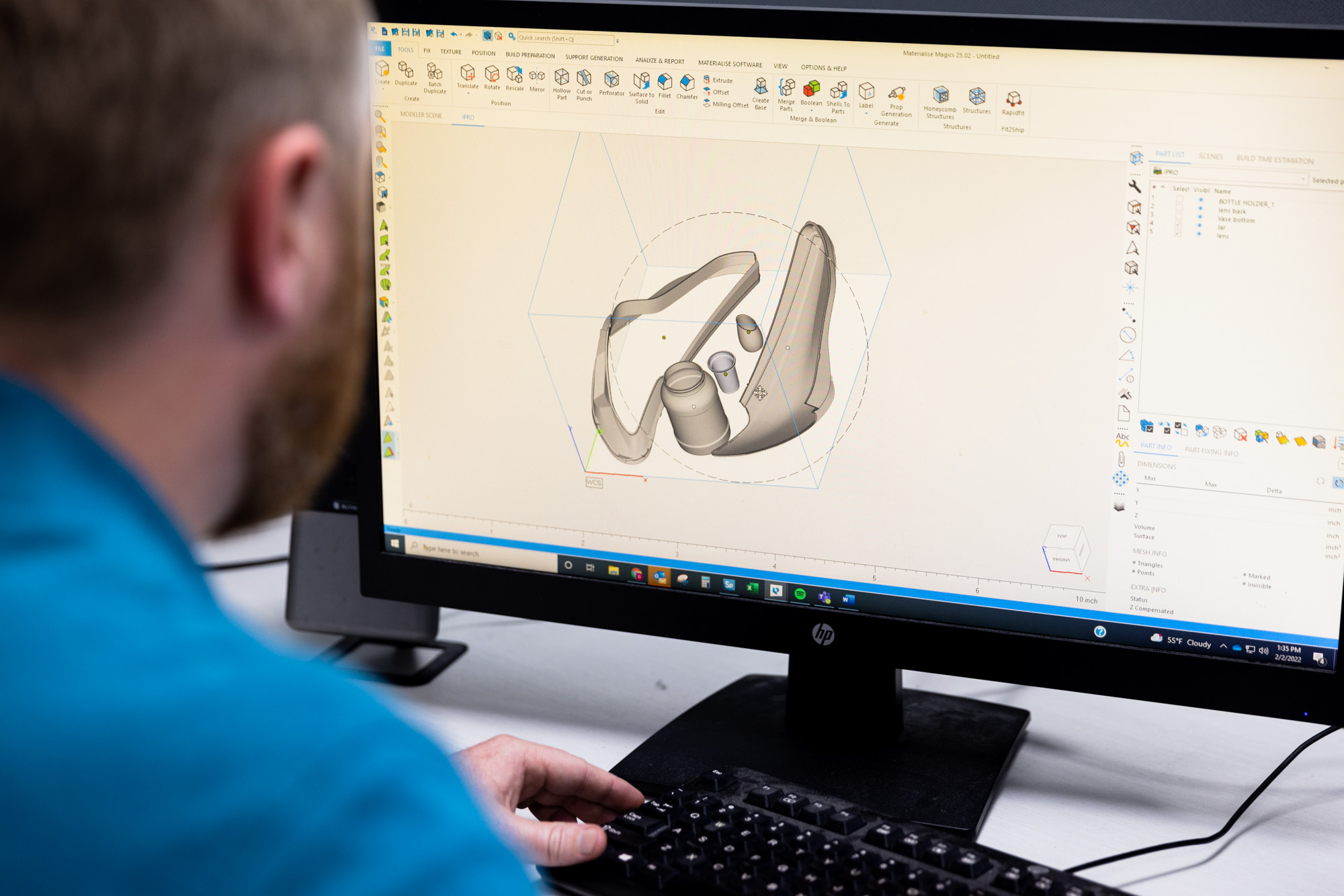
Upload your CAD file through QuickQuote® to start your SLS project. Our team reviews part geometry, material requirements, quantities, and finishing specifications.

Receive a custom quote
QuickQuote® provides pricing, lead times, and manufacturability feedback in seconds. Our engineers also review project requirements and production considerations.

Confirm specifications
Before production begins, Quickparts confirms materials, finishes, quantities, and delivery requirements. This review helps identify potential manufacturing challenges early.

Production begins
Our manufacturing teams produce parts using industrial SLS equipment and production-grade materials. Extensive machine capacity supports fast turnaround times, with some projects shipping in as little as one business day.

Inspection and delivery
Each project undergoes quality inspections to verify dimensional accuracy and part quality. Quickparts then ships your finished parts to meet your project timeline.
Why choose Quickparts for Selective Laser Sintering?
01
Global presence
Quickparts supports SLS projects through manufacturing facilities across the US and Europe. Our in-house facilities and global network help teams move from prototype to production with reliable lead times.
02
State-of-the-art equipment
Industrial SLS equipment and extensive machine capacity support complex geometries and fast turnaround times. Some projects can ship in as little as one business day.
03
Experienced engineers
Our engineers help evaluate part designs, materials, finishes, and manufacturability requirements. This support helps teams identify potential challenges before production begins.
04
Quality assurance
Experienced operators and production-grade equipment help deliver parts that match design requirements. Every project undergoes quality inspections before shipment.
05
Transparent communication
QuickQuote® provides pricing, lead times, and project details early in the process. Our team remains available throughout production to answer questions and provide updates.

Selective Laser Sintering materials and finishes
Quickparts offers a range of SLS materials and finishing options for prototype and production applications. Our engineers help identify the right material, finish, and manufacturing approach based on your performance, durability, and design requirements.
Choose from nylon and TPU-based materials that support functional testing, snap-fit parts, thin-wall enclosures, interlocking components, and end-use applications. We also offer custom finishing options to help meet your appearance, performance, and branding requirements.
Relevant applications
General
- Rapid prototyping: Creating realistic models for evaluation before full production.
- Production: Convenient for small to medium batches and customized products.
- Functional prototyping: testing usability, ergonomics, and manufacturability.
- Complex Geometries: Parts with intricate details and internal features.
- Durable Parts: End-use applications demanding strength and heat resistance.
Production for industry
- Aerospace
- Medicine and healthcare
- Electronics
- Defense and security
- Automotive
- Industrial products, machinery and robotics
Master Tools and Models
- Masks and equipment
- Models for micro-casting
Production
- Components in small to medium series
- Complex plastic parts
- Consolidation of the parts
Materials
- DuraKor™
- Nylon 12 PA
- Nylon 12 GF
- Nylon 12 HST
- Nylon 11 EX (Black)
- Nylon 11 EX (Natural)
- TPU elastomer
Looking for material data?
All technical data for SLS materials is available in our Materials Guide. Explore our Quick Guide to Physical Properties or download the full datasheet. Click here.
Finishes
- Standard (uncoated)
- Standard (coated)
- Ready for painting
- Painted
- Dyed
- Vapor smoothing
- Custom
Relevant resources
Get Selective Laser Sintering 3D printing for different prototyping and manufacturing needs
Quickparts helps teams determine whether SLS is the right fit for their project requirements. Our engineers can recommend the best manufacturing approach based on part geometry, performance requirements, quantities, and timelines.

Rapid prototyping
Show the look and feel of a product or part of it before investing in more expensive production equipment.

Small series production
Reduce tooling costs, produce customized products, or quickly bring a new product to market with small batch production while your facilities are prepped for higher volume production.

Functional prototyping
Go beyond look and feel by empowering your team to evaluate factors like usability, ergonomics, manufacturability, and material behavior.

Complex geometries
Produce intricate features, internal channels, and interlocking components that may be difficult to manufacture with traditional methods. SLS does not require dedicated support structures, allowing greater design flexibility.

Durable parts
Create strong parts for functional testing, end-use applications, snap-fit assemblies, and thin-wall enclosures. Multiple nylon and TPU material options support a range of mechanical and performance requirements.
Our other manufacturing services
Contact us today to find the most suitable manufacturing process for your needs.


Explore other resources


Selective Laser Sintering FAQs
What is SLS 3D printing?
SLS 3D printing is an additive manufacturing process that uses a laser to fuse powdered materials into durable, functional parts. Quickparts uses SLS to produce prototypes, functional testing parts, and low-volume production components with complex geometries and production-grade materials.
What are the advantages of SLS technology?
SLS supports a wide range of prototyping and production requirements. Key advantages of the process include:
- Producing complex geometries without dedicated support structures
- Supporting functional testing with durable nylon and TPU materials
- Reducing tooling costs for prototypes and low-volume production
- Creating snap-fit parts, thin-wall enclosures, and interlocking components
- Supporting fast turnaround times for prototype and production projects
- Offering multiple finishing options, including painted, dyed, and custom finishes
How fast is SLS 3D printing?
SLS is one of the faster additive manufacturing processes for producing durable prototypes and low-volume production parts. At Quickparts, some SLS projects can ship in as little as one business day, although lead times vary based on part size, complexity, quantity, and finishing requirements.
Can SLS be used for small production runs?
Yes. SLS is commonly used for small production runs because it does not require tooling. The process supports low-volume manufacturing, bridge production, customized parts, and early product launches while reducing upfront production costs.
Is SLS or MFJ better?
Both SLS and MJF are powder-based 3D printing technologies that produce durable, functional parts without support structures. The better option depends on your project requirements.
SLS uses a laser to fuse powdered material layer by layer. It is often selected for functional prototypes, complex geometries, and applications that require a broad range of material options and finishes.
MJF uses fusing and detailing agents with heat to build parts. It is often chosen for higher-volume production, consistent surface quality, and parts that require fine feature detail.
If your project prioritizes material flexibility and proven performance across a wide range of applications, SLS may be the better choice. If you need larger quantities of parts with consistent surface finishes, MJF may be a better fit.
What is the difference between SLS and SLA?
SLS and SLA are both 3D printing technologies, but they use different materials and are suited to different applications. SLS uses a laser to fuse powdered materials into durable parts, while SLA uses a laser to cure liquid resin into solid parts.
SLS is often chosen for functional prototypes, complex geometries, and low-volume production because it produces strong parts without dedicated support structures. SLA is commonly used for prototypes that require smooth surface finishes, fine details, and presentation-quality appearance. The best choice depends on whether your project prioritizes functional performance or visual quality.