Precision CNC milling services for complex, custom parts
Quickparts CNC milling services support custom metal and plastic parts across prototype, low-volume, and production needs.

 ITAR Registered
 ISO 9001:2015






Quickparts CNC milling services support custom metal and plastic parts across prototype, low-volume, and production needs.
Produces functional milled prototypes for fit checks, design validation, and performance testing using production-grade metals and plastics.
Supports small production runs, bridge quantities, and custom components without dedicated tooling investment.
Scales repeat milling projects with dimensional consistency, material control, and inspection support across production runs.
Quickparts’ CNC milling capabilities support the production of custom parts with simple features, multi-sided geometries, and repeat production requirements.
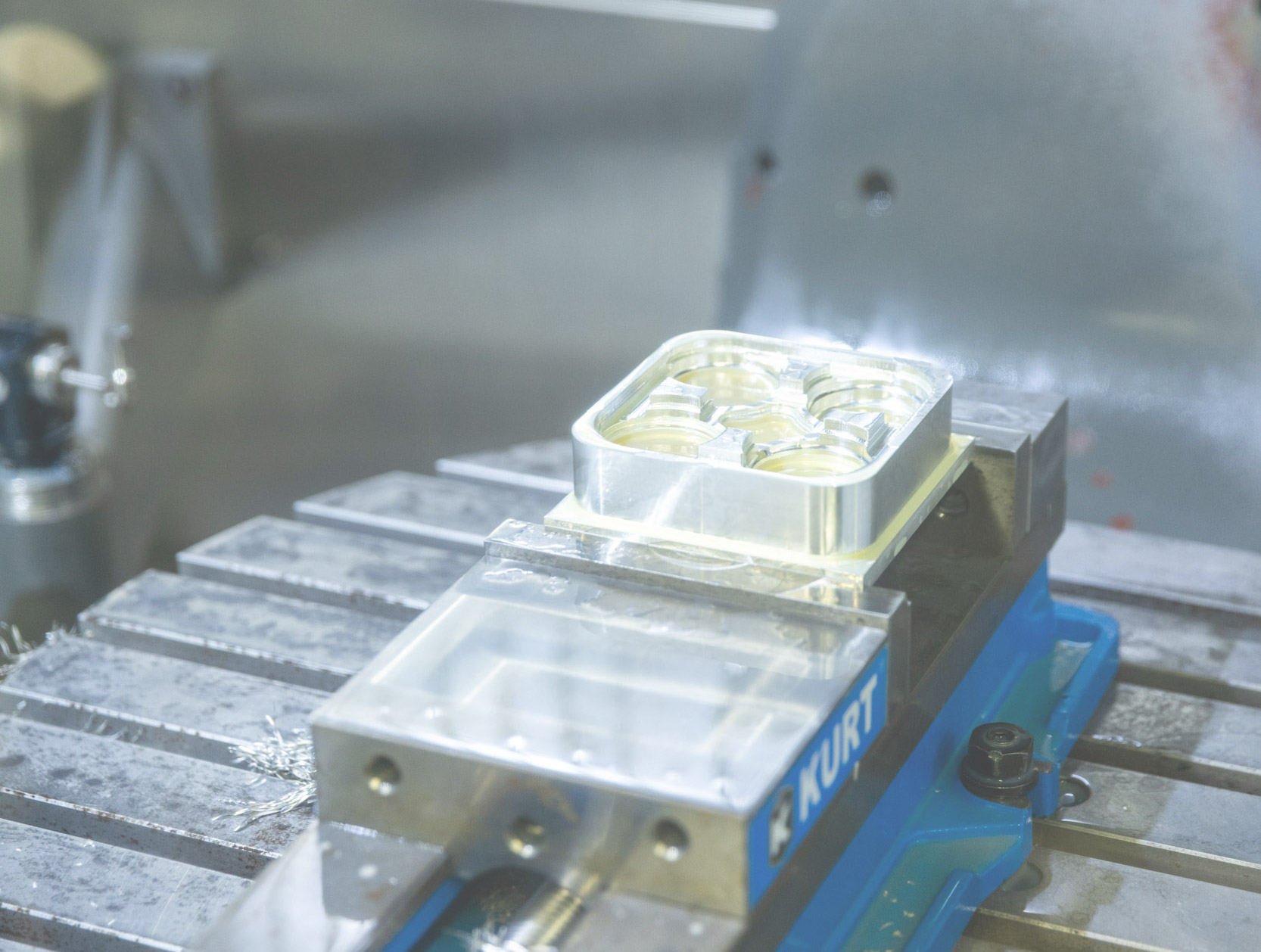
Produces flat surfaces, pockets, slots, holes, and simple contours by moving the cutting tool across the X, Y, and Z axes.
Adds rotational movement to the machine, allowing multiple sides of a part to be machined in fewer setups, which supports angled features and more complex geometries.
Machines complex shapes, tight angles, and detailed features by moving the tool or workpiece across five axes during production.
Removes material at controlled speeds to support shorter cycle times, clean surface finishes, and efficient production for suitable part designs.
Supports precision parts with dimensional requirements that depend on material, geometry, feature size, and finishing needs.
Handles repeat CNC milling projects with process review, material control, and inspection support across production runs.
Quickparts supports CNC milling projects with custom manufacturing guidance, material options, and production support from quote through delivery.
Delivers CNC-milled parts with fast quoting, efficient production planning, and delivery support for prototype and production projects.
Produces custom-milled parts in metals and plastics, including aluminum, steel, brass, copper, and engineering-grade plastic materials.
Supports CNC milling projects through a global production network.
Machines complex part features, tight dimensions, and custom specifications using advanced CNC milling equipment.
Supports complex milling requirements with more than 35 years of manufacturing experience across industries and applications.
Provides engineering guidance, production review, machining support, and delivery coordination for custom CNC milling projects.
Quickparts CNC milling supports metal and plastic materials for parts with varying strength, weight, durability, heat resistance, and tolerance requirements. Material grade selection depends on how the part will function, where it will operate, and the machining or finishing requirements.
Metals:
Plastics:
The finish selection depends on how the CNC-milled part will function, look, and perform after machining.
Some parts can use an as-machined finish when only standard surface quality and dimensional accuracy are required. Other parts may require secondary finishing to improve corrosion resistance, wear resistance, conductivity, color, or appearance.
CNC milling works well for custom parts that need precise features, strong materials, and repeatable dimensions across prototype and production use.
Prototype housings, brackets, mounts, heat sinks, and mechanical components help teams test fit, function, and material performance before production begins.
Bridge production parts fill short-term manufacturing needs with milled enclosures, adapters, connectors, brackets, and assemblies while larger production programs move forward.
End-use milled parts include aerospace brackets, automotive components, medical device parts, electronics housings, and industrial equipment components.
Custom fixtures, jigs, gauges, soft jaws, inspection tools, and assembly aids help teams hold, measure, and assemble parts with repeatable accuracy.
Quickparts reviews each CNC milling project before production begins. Timing depends on part geometry, material, tolerance, quantity, and finishing needs.
Quickparts CNC experts review your project goals, CAD files, material needs, tolerance requirements, and production timeline.
The engineering team reviews part geometry, feature sizes, material selection, surface finish requirements, and production risks before machining begins.
CNC programmers review toolpaths, machine setup, cutting strategy, and inspection requirements to prepare the part for milling.
Inspection confirms that the milled part meets the required dimensions, tolerances, and specifications before wider production.
Prototype jobs, bridge quantities, and repeat production runs follow different timelines based on complexity, order size, and finishing requirements.
Quickparts supports the full CNC milling workflow with engineering guidance, production support, quality checks, and delivery coordination.
CNC milling can hold tight tolerances, with Quickparts supporting tolerances down to ±0.0002 inch on suitable parts.
Actual tolerance capabilities depend on part geometry, material, feature size, surface finish requirements, and production volume.
CNC milling is a computer-controlled machining process that removes material from a solid metal or plastic workpiece. The process uses rotating cutting tools to create custom parts with precise dimensions, complex features, and repeatable results.
CNC milling starts with a digital part design and uses computer-controlled cutting tools to remove material from a solid workpiece.
CNC milling works best when a part needs precise dimensions, durable materials, complex features, or a functional surface finish. It suits prototypes, bridge production parts, end-use components, fixtures, tooling, housings, brackets, mounts, heat sinks, and mechanical parts.
CNC machining is the broader manufacturing category. It includes CNC milling, CNC turning, EDM, and other computer-controlled processes that remove material from a workpiece. CNC milling is one type of CNC machining. It uses rotating cutting tools to create features such as pockets, slots, holes, contours, and flat surfaces.
3-axis milling moves the cutting tool along the X, Y, and Z axes. It works well for parts with flat surfaces, simple contours, pockets, slots, and holes. 5-axis milling adds additional tool or workpiece movement, allowing the machine to reach angled surfaces and complex features in fewer setups.