


Demand for injection molding is growing steadily, with the global injection molding market valued at approximately $312.7 billion in 2025 and projected to reach about $462.4 billion by 2033. As that investment climbs, engineering teams rely more on injection molding prototyping to test real parts before they commit to expensive production tools.
In this article, we’ll focus on injection molding prototyping services in the US, what makes them effective, and how the right service can help you validate designs with production-equivalent parts before scaling up. You’ll also find a breakdown of some of the best injection molding prototyping services, so you can compare capabilities, lead times, and services without having to sort through dozens of options on your own.
Key Takeaways
- Injection molding prototyping lets teams test parts early, so they can validate fit, function, and appearance before committing to expensive high-volume tooling.
- The best injection molding prototyping services combine fast lead times, robust DFM support, wide material coverage, and flexible tooling options for prototypes, bridge tooling, and full production.
- When choosing a service, teams should prioritize end-to-end support, transparent communication, rigorous manufacturing analysis, clear tool ownership, quality assurance, and the ability to scale smoothly from small batches to long-run production.
What Is Injection Molding Prototyping?
Injection molding prototyping is the practice of producing prototype parts using the same molding method used in full-scale manufacturing. Instead of relying on rough samples or early mock-ups, this approach creates prototypes that match the geometry, detail, and material expected in final production.
Teams use these molded prototypes to test how a part fits, performs, and looks before committing to high-volume tooling, which helps reduce risk and refine the design early in the development process.
How Does Injection Molding Prototyping Work?
Injection molding prototyping follows the same core principles as production injection molding, but focuses on producing accurate test parts before committing to high-volume tooling. The goal is to create prototypes that match the final material, geometry, and performance so teams can validate the design early.
Once the setup is ready, the process runs through a controlled sequence that shapes, cools, and releases each molded part.
- Design: The part is modeled and adjusted so it fills properly, releases from the mold, and meets the requirements for strength, tolerance, and appearance.
- Mold Creation: A prototype mold is machined in aluminum or steel with the cavity, runners, gates, and cooling features needed to form the part.
- Injection: Plastic pellets are melted and injected into the mold cavity through the sprue and runner system to capture the part’s exact geometry.
- Cooling: The material cools against the mold surfaces until it hardens enough to hold its shape without distortion.
- Ejection: The mold opens and ejector pins release the finished prototype so it can be inspected, tested, or used for further iterations.
Benefits of Injection Molding Prototyping
Injection molding prototyping gives teams a reliable way to test real parts early in development without committing to full-scale tooling. It provides:
- Production-equivalent parts: Provides parts that match the final geometry, material, and appearance, which lets teams evaluate real-world performance instead of relying on rough approximations.
- Early flaw detection and faster design iteration: Reveals issues with wall thickness, fit, flow, or geometry before mass production and supports quick design updates so teams move toward a final version with fewer delays.
- Cost-effective for low volumes: Reduces upfront tooling costs and supports small-batch runs for testing, validation, and pilot builds without a heavy investment.
- Faster turnaround: Shortens lead times with simpler tools and short-run processes so teams get parts in hand sooner and keep development on schedule.
Quickparts’ work with Summit Safety shows how this plays out in practice. Summit Safety needed molded parts for its RIT Tracker firefighter locator system on a tight schedule, without paying a premium for tooling or sacrificing quality. Quickparts provided DFM feedback, built tools that could later be transferred in-house, and delivered short-run injection-molded parts quickly enough to keep the product launch on track.
Best Injection Molding Prototyping Services
Injection molding prototyping services give teams a fast, reliable way to validate designs with production-equivalent parts before scaling up. Instead of guessing how a part will perform, you can test real materials, real geometries, and real manufacturing constraints early in development.
Here are some of the best injection molding prototyping companies to partner with in the US.
1. Quickparts

Year founded: 1990
Headquarters: Seattle, Washington, USA
Quickparts focuses on injection molding for prototyping, bridge tooling, and high-volume production. Their in-house tooling and global manufacturing network, combined with fast turnaround, make them a strong option for teams that need molded parts quickly and at scale. With mold classes ranging from 105 to 103, they support everything from early design validation through long-running production tools.
They offer more than 15 stocked materials and can also work with customer-supplied resins. Every project includes a design-for-manufacturing (DFM) review to catch potential issues before tooling begins, which helps reduce rework and cost later in the program. Quickparts is ISO 9001:2015 and ISO 27001:2022 certified and ITAR registered, so they can support quality-critical and regulated applications.
Quickparts targets tight dimensional control, with tooling precision down to ±0.07 mm. Their engineers work directly with customers to meet both functional and cosmetic requirements, and their process is built for speed and predictability. Prototype parts can ship very quickly, and production programs are scheduled to move into steady, repeatable output without long delays.

Injection molding capabilities:
- Quick molded parts: Uses aluminum tooling to produce prototype and low-volume parts, with typical tool life around 250 pieces and maximum part sizes near 115x70x50 mm. Supports more than 15 stock materials, with design limits such as no sliders or lifters. From design to molded parts in 5 days.
- Prototyping: Applies aluminum or steel molds for medium runs up to about 2,500 parts. Supports part sizes up to 2000x800x350 mm, with tools that usually ship 2 to 6 weeks after approval and hold standard production tolerances.
- Production molding: Delivers tooling and production molding solutions for runs that range from roughly 10,000 parts into the millions. Accepts customer-supplied materials, supports automated press loading, and part sizes up to about 2000 × 800 × 350 mm with typical delivery in 4 to 8 weeks.
- Advanced process techniques: Provides overmolding, insert molding, stack molds, multi-cavity tooling, and hot-runner systems to support complex geometries and multi-material designs.
Other manufacturing and production services:
- CNC machining: Delivers 3-, 4-, and 5-axis CNC milling and turning with tolerances as tight as ±0.001, suitable for both metal and plastic parts in low- to high-volume runs.
- Additive manufacturing: Supports stereolithography (SLA), selective laser sintering (SLS), direct metal printing (DMP), fused deposition modeling (FDM), and other digital fabrication methods for prototyping and end-use parts.
- Sheet metal fabrication: Includes laser cutting, water jetting, stamping, bending, welding, and finishing processes to produce enclosures and assemblies across materials like aluminum, stainless steel, brass, and titanium.
- Die casting: Provides traditional die casting using both hot‑chamber (zinc) and cold‑chamber (aluminum) methods for small‑ to mid‑sized metal parts with consistent surface quality and dimensional repeatability.
- Cast urethane: Produces cast urethane prototypes and master patterns for investment casting applications, offering support from pattern through low‑volume casting. This is a great solution for low-volume manufacturing of molded parts.
- Rapid prototyping: Supports fast-turn prototypes across multiple manufacturing processes to help validate designs and iterate quickly.
2. Fathom

Year founded: 1969
Location: Hartland, Wisconsin, USA
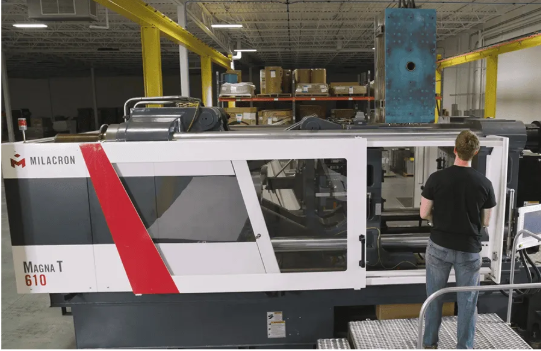
Fathom provides global plastic injection molding as part of a broader contract manufacturing network that includes domestic, international, and hybrid production options. The company supports projects from prototyping through mid-volume production, combining in-house tooling, overseas partners, and engineering support. Customers can choose U.S.-based molding, lower-cost overseas production, or export tools that move between regions as volumes and sourcing strategies change.
Project teams can use Fathom for a single step or for an entire program, drawing on multiple manufacturing technologies, engineering input on process and material selection, and quality systems that cover inspection, documentation, and compliance across sectors such as aerospace, industrial, medical, and consumer products.
Injection molding capabilities:
- Prototype tooling: Builds hardened steel prototype tools rather than short-life aluminum, so parts can move from sampling into early production without changing molds.
- Production tools: Designs and produces production tooling with gating and cooling systems tuned for the required geometry and volumes.
- Rapid tooling: Offers steel rapid tooling via ICOMold by Fathom, with sample parts produced on an accelerated schedule for bridge and low-volume runs.
- Specialty molding: Supports multi-cavity molds, family tools, insert molding, overmolding, two-shot molding, and MUD systems for programs that need flexible or multi-material setups.
- Materials: Works with a broad range of thermoplastics, including polypropylene, polycarbonate, ABS, engineering-grade resins, PEEK, glass-filled nylons, Delrin, and additional crystalline, amorphous, and specialty plastics through the ICOMold network.
Other manufacturing and production services:
- 3D printing: Offers SLS, MJF, DMLS, SLA, STEP, PolyJet, and FDM with in-house post-processing for parts that range from early prototypes to production applications.
- CNC machining: Provides 3- and 5-axis milling and turning for metals and plastics, including DFM support and a variety of finishing options.
- Metal cutting & forming: Delivers sheet metal prototyping and fabrication, plus laser cutting, waterjet and micro waterjet, photo-chemical etching, and wire EDM.
- Assembly & finishing: Completes parts with painting, powder coating, texturing, vapor smoothing, machining, insert installation, labeling, and full assembly services.
3. Fictiv

Year founded: 2013
Location: San Francisco, California
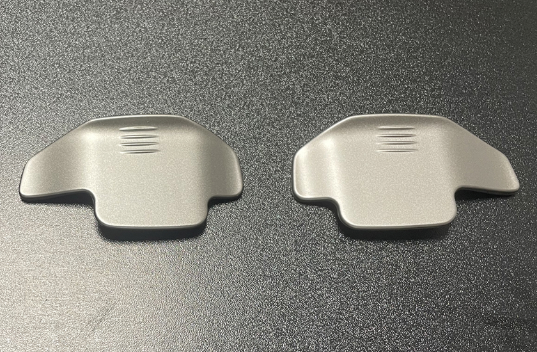
Fictiv provides injection molding through a digital manufacturing platform that connects customers to a managed global partner network. The service covers prototyping through full production, with no minimum order quantities and an emphasis on program visibility. Teams upload CAD data, configure projects in an online quote-to-order system, and receive pricing with automated DFM feedback and mold-flow insights.
Injection molding capabilities:
- Prototype and bridge tooling: Uses steel tooling to deliver T1 samples in short timeframes, with parts built to print tolerances for early validation, pilot runs, and bridge production.
- Production molding: Supports Class 102 and 103 molds, Class 101 where needed, with press sizes from roughly 35 to 3,000 tons and cycle ranges that extend into the hundreds of thousands or more per tool.
- GlobalFlex tooling: Produces tooling inserts that fit proprietary frames and can run in China, the U.S., or Mexico, giving programs flexibility to shift production as sourcing strategies change.
- Materials: Can mold most commercially available thermoplastics and supports material selection with tools like Materials.Ai and engineering input for specific resin and performance needs.
Other manufacturing and production services:
- 3D printing: Provides FDM, SLS, SLA, PolyJet, MJF, and DMLS with material and finish choices suited to both prototyping and production applications.
- CNC machining: Offers milling and turning for metals and plastics, paired with DFM guidance and managed inspection.
- Sheet metal fabrication: Delivers laser-cut, formed, and assembled sheet metal components for enclosures, brackets, and structural parts.
- Die casting: Produces metal components through a managed network of domestic and overseas partners for programs that need cast mechanical parts.
- Compression molding: Manufactures durable molded components in rubber or similar materials using relatively simple tooling compared with some alternatives.
4. Ironwood Plastics, Inc

Year founded: 1979
Location: Ironwood, Michigan
Ironwood Plastics focuses on close-tolerance injection molding for applications that depend on precision and repeatability. The company supports programs in automotive, medical, electronics, and defense, operating two facilities in Ironwood, MI, and Two Rivers, WI.
Engineering, tooling, molding, and secondary operations are managed in-house, giving customers a single team overseeing part development, tooling configuration, and quality control. Ironwood became part of CTB, Inc. in 2010 and maintains ISO 9001 and IATF 16949 certification with ITAR compliance.

Injection molding capabilities:
- Tight-tolerance molding: Produces precision components such as connectors, housings, and battery-system parts where dimensional accuracy is critical.
- Insert and overmolding: Molds plastic around metal inserts or pre-molded components for added functionality and structural performance.
- Reel-to-reel continuous molding: Supports high-volume automated molding for electronic and connector applications where parts remain attached to carrier reels.
- Two-shot and transfer molding: Provides multi-material and multi-color molding options, including rotary-platen two-shot capability for integrated part structures.
Other manufacturing and production services:
- Secondary operations: Includes pad printing, sonic welding, foam-in-place gasketing, and tape-and-reel packaging for components entering automated assembly lines.
- Engineering support: Offers CAD review, material and process input, tooling development, and quality-system oversight aligned with ISO 9001, IATF 16949, and ITAR requirements.
5. Murray Plastics

Year founded: 1998
Location: Gainesville, Georgia, USA
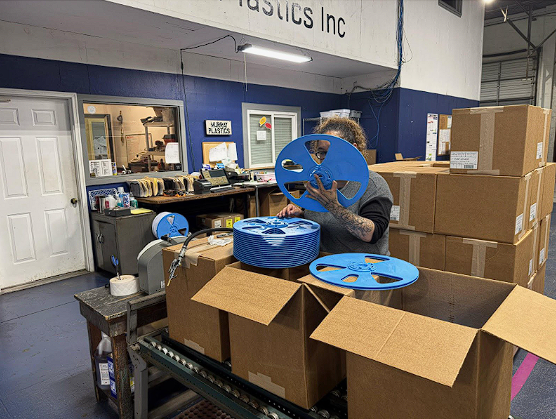
Murray Plastics is a custom plastic injection molding company that focuses on precision parts and tailored production support. The team combines in-house mold building with injection molding to produce intricate components for a range of customer requirements. The company works with a variety of plastic materials, including eco-friendly options, and positions itself as a competitive source for American-made plastic parts across different production stages.
Injection molding capabilities:
- Custom injection molding: Produces molded plastic components using customer-specific tooling and advanced molding techniques for detailed part geometries.
- Mold building: Designs and builds production molds in-house to support new programs and ongoing tooling maintenance.
- Material flexibility: Works with numerous plastic materials, including eco-friendly formulations, and helps customers select suitable resins for performance and cost targets.
Other manufacturing and production services:
- Design and engineering support: Provides part design and engineering support using tools such as SolidWorks CAD and Mastercam, alongside prototyping via 3D printing.
- Secondary operations: Delivers ultrasonic welding, assembly, surface finishing, bar-code labeling, packaging, and fulfillment services.
- Inventory and logistics: Manages inventory, warehousing, and distribution support to give customers ongoing order flexibility and more streamlined logistics.
6. Nicolet Plastics

Year founded: 1986
Location: Mountain, Wisconsin, USA
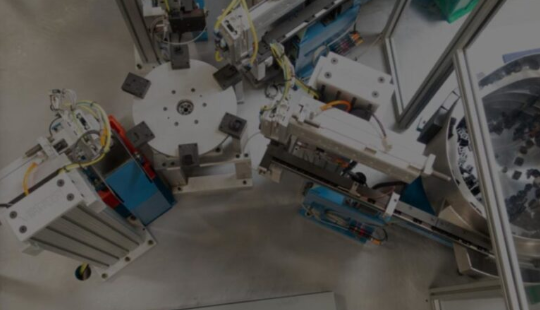
Nicolet Plastics provides custom injection molding for low- to high-volume production across industrial, medical, aerospace, marine, and consumer markets. The company operates two facilities in Wisconsin and supports product development through engineering collaboration, tooling guidance, and prototyping. Its equipment ranges from 30- to 600-ton presses, with capabilities in automated insert molding, tight-tolerance molding, micro molding, and additive manufacturing for both plastic and metal applications.
Injection molding capabilities:
- Custom injection molding: Produces molded plastic components using presses from 30 to 600 tons, supporting a wide range of part sizes, resin types, and production volumes.
- Insert and overmolding: Uses automated insert-molding cells and overmolding methods to integrate metal components or secondary materials into molded parts.
- Tight-tolerance and micro molding: Manufactures small or complex components requiring precise dimensional control for industries such as medical, electronics, and aerospace.
- Tooling and prototype support: Assists with tool sourcing, tooling inspection, and design-for-manufacturability to ensure mold readiness and production stability.
Other manufacturing and production services:
- Custom plastic injection molding: Produces molded parts across a wide range of resins and press sizes to support different part geometries and volumes.
- Insert molding: Molds plastic around metal or other inserts to add strength, attachment points, or electrical features to components.
- Metal to plastic conversion: Replaces metal components with engineered plastic alternatives to reduce weight, simplify assembly, or adjust performance.
- Engineering & product support: Provides design-for-manufacturability input, tooling guidance, and launch support to help move parts from concept into production.
- Additive manufacturing: Uses 3D printing in plastic and metal to create prototypes or low-volume parts that support design validation and production planning.
7. Plastek Industries

Year founded: 1956
Location: Erie, Pennsylvania, USA
Plastek Industries is a global plastics manufacturer focused on packaging for personal care, beauty, home care, pharmaceutical, and food and beverage applications. The company operates as a full-service partner offering industrial design, product and package development, mold design and build, and a range of molding technologies.
Injection molding capabilities:
- Custom injection molding: Produces molded components for packaging applications using injection, injection blow, and injection stretch blow molding technologies.
- Mold design and manufacturing: Designs and builds production tooling in-house, supported by advanced CAD/CAM systems and multidisciplinary engineering teams.
- Automated molding and assembly: Runs high-volume molding cells with integrated automation to support packaging lines requiring consistent output, tight tolerances, and value-added operations.
Other manufacturing and production services:
- Package development: Develops new packaging concepts through R&D, industrial design, and prototype evaluation.
- Value-added operations: Provides assembly, decorating, and post-molding services for complete packaging solutions.
- Global manufacturing support: Operates facilities in the U.S., U.K., Brazil, and Mexico to support regional production strategies, supply chain continuity, and customer-specific logistics needs.
8. Protolabs

Year founded: 1999
Location: Maple Plain, Minnesota, USA
Protolabs is a digital manufacturing provider that focuses on rapid production of custom parts through injection molding, CNC machining, 3D printing, and sheet metal fabrication. The company uses automated quoting and design-for-manufacturability analysis to move parts from prototype into production, with options for prototype tooling and on-demand manufacturing.
Protolabs supports quality frameworks such as ISO 9001:2015 and ITAR, with access to ISO 13485 through its partner network. Its model combines in-house “digital factories” with Protolabs Network, a managed group of external manufacturing partners.

Injection molding capabilities:
- Prototype injection molding: Produces plastic and liquid silicone rubber prototypes using aluminum tooling, with T1 samples available in days and mold life guaranteed for at least 2,000 shots.
- On-demand manufacturing: Provides production-oriented molding with single and multi-cavity tools, extended mold life, and quality documentation such as CTQ studies and in-process CMM inspections.
- Specialty molding processes: Supports insert molding, overmolding, family and multi-cavity molding, and secondary operations for projects that require more complex tool configurations or assemblies.
- Material range: Molds a broad set of thermoplastics and thermosets, covering ABS, polycarbonate, polypropylene, PEEK, TPU, standard and medical-grade silicone, and other engineering materials.
Other manufacturing and production services:
- CNC machining: Offers milling and turning for metals and plastics, including production machining and a range of finishing and inspection options.
- 3D printing: Provides additive processes such as stereolithography, selective laser sintering, Multi Jet Fusion, PolyJet, fused deposition modeling, and metal 3D printing.
- Sheet metal fabrication: Delivers laser cutting, punching, forming, bending, and fabricated assemblies to support enclosures, brackets, and other metal components.
- Digital manufacturing network: Extends capacity and capabilities through Protolabs Network, a vetted partner ecosystem that supports higher volumes, additional certifications, and regional production strategies.
9. Protoshop
Year founded: 2021
Location: Carlsbad, California, USA
Protoshop focuses on prototype injection molding for engineering teams that need production-like plastic parts early in development. The founders draw on extensive medical product experience and have built thousands of prototype molds, with an emphasis on complex geometries, challenging materials, and rapid mold iterations.
The company aims to replicate production molding conditions using Arburg production presses so that prototype parts closely match later high-volume output.

Injection molding capabilities:
- Prototype injection molding: Produces low-volume molded parts using soft-metal prototype tools that closely mirror production mold behavior.
- Complex geometry molding: Supports difficult part designs, including microfeatures, overmolded sealing components, and flexible parts that many prototype vendors reject.
- Rapid mold iterations: Builds molds to allow quick engineering changes, with typical mold modifications completed in about one day once new geometry is defined.
- Material flexibility: Works with a wide range of thermoplastics, including Topas (COC), polycarbonate, TPE, PE, and PP, and can run customer-supplied materials when needed.
Other manufacturing and production services:
- Design review: Provides collaborative moldability reviews where engineers walk through potential defect areas on part models and suggest adjustments before tooling.
- Material selection support: Assists with resin selection across thousands of thermoplastic grades, including guidance on mechanical, regulatory, and processing requirements.
- Prototype mold fabrication: Designs and fabricates proprietary prototype tooling to speed sampling, testing, and design refinement ahead of production tooling.
Inspection and reporting: Delivers dimensional inspections and CTQ measurements with documentation shared alongside shipments and project status updates.
10. UPTIVE

Year founded: 2016
Location: Libertyville, Illinois, USA
Uptive is a digital manufacturing provider that combines rapid prototyping and production services across additive manufacturing, CNC machining, sheet metal, and injection molding. The company was formed by bringing together RE3DTECH, GoProto, Phoenix Proto, and Stanfordville Machine, and operates multiple facilities in the United States and Mexico.
Uptive focuses on custom mechanical components for sectors such as aerospace, automotive, medical, electronics, and industrial equipment. UPTIVE utilizes high-speed 5-axis CNC machines, EDM, and surface and form grinders. They also enable teams to create custom mold bases for intricate or high-volume projects.
Injection molding capabilities:
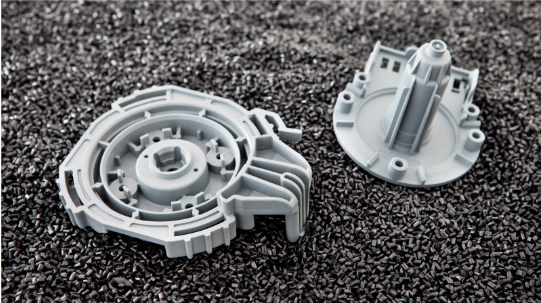
- Custom injection molding: Produces plastic components using steel and aluminum tooling, with options for rapid injection tooling, bridge tooling, and production tooling.
- Complex part geometries: Supports undercuts, threads, and intricate features through tailored mold bases, tool inserts, and process optimization.
- Material coverage: Works with a range of plastics, elastomers, and filled materials, matching resins to performance and industry requirements for part strength, weight, and durability.
Other manufacturing and production services:
- Additive manufacturing: Provides industrial 3D printing for metals, polymers, and composite applications as part of rapid prototyping and production programs.
- CNC machining & sheet metal: Delivers machined and fabricated metal components using multi-axis CNC, sheet metal forming, and related processes.
- Post processing & finishing: Offers post processing, coating, and finishing workflows integrated with quality management, inspection, and industry-standard documentation.
11. Xometry

Year founded: 2013
Location: North Bethesda / Gaithersburg, Maryland, USA
Xometry operates an AI-driven online marketplace that connects buyers with a vetted network of manufacturers instead of producing parts in its own facilities. It manages quoting, engineering evaluation, quality assurance, and project management centrally, while relying on external partners for manufacturing across multiple processes and industries.

Injection molding capabilities:
- On-demand plastic injection molding: Provides prototype and production plastic parts using a global partner network, with options for domestic and international molding based on lead time and cost.
- Tooling options: Supports single, multi-cavity, and family molds in aluminum and steel, with mold classes ranging from prototype tools to high-volume Class 101 production tooling.
- Process range: Offers standard injection molding alongside insert molding, overmolding, liquid silicone rubber molding, gas-assist molding, medical-grade molding, and large-part injection molding for diverse applications.
Other manufacturing and production services:
- CNC machining: Delivers precision CNC milling, turning, drilling, and related operations in metals and plastics, covering prototype through production quantities.
- 3D printing: Provides additive manufacturing in polymers and metals using processes such as SLS, MJF, SLA, FDM, PolyJet, and metal 3D printing for functional parts and prototypes.
- Sheet and tube fabrication: Supports laser cutting, punching, bending, forming, and fabricated assemblies to produce enclosures, brackets, and structural components.
- High-volume metal production: Coordinates processes like die casting, metal stamping, and related production methods through its partner network for scaled metal part manufacturing.
How to Choose Injection Molding Prototyping Services
Selecting the right injection molding prototyping company shapes everything from design confidence to production success. Focus on key indicators that show the provider can support your timeline, technical needs, and long-term goals.
- End-to-end partnership: Evaluates how well the provider supports your entire development cycle, including design input, manufacturability guidance, and iterative refinement.
- Transparent communication: Shows how clearly the team explains timelines, tooling options, risks, and expectations so you avoid surprises during prototyping or early production.
- Robust manufacturing analysis: Assesses the provider’s ability to flag design issues, optimize features, and recommend tooling or material adjustments that improve part performance.
- Tool ownership: Clarifies who owns and maintains the mold, which determines your control over future production, revisions, and supplier flexibility.
- Fast delivery times: Indicates the provider’s ability to produce molds and parts quickly enough to keep your R&D schedule moving without unnecessary delays.
- Material flexibility and expertise: Reveals whether the partner can work with a wide range of resins, match performance requirements, and guide you toward the most suitable material.
- Quality assurance and precision: Demonstrates how the provider inspects molded parts, holds tolerances, and documents results to ensure prototypes accurately represent final production parts.
- In-house manufacturing: Signals the provider’s ability to control cost, quality, and lead time by keeping tooling, molding, and secondary operations under one roof.
- Long-term fit: Shows whether the partner can evolve with your needs, moving from prototypes to bridge tooling and full production without disrupting your supply chain.
Partner with the Best Injection Molding Prototyping in the US
Choosing an injection molding service that supports your entire product lifecycle reduces risk and accelerates every stage of development. You want a team that provides engineering input, reliable tooling, transparent inspection standards, and material flexibility so your prototypes match production intent.
Quickparts delivers prototype and production tooling across multiple classes, including Class 105 for rapid prototype molds and Class 103 for higher-volume runs. Tooling is available in aluminum or steel, with supported part sizes reaching up to 1524 mm in length. Prototype parts often ship in about one week, while production molds typically arrive in two to four weeks. Tooling tolerances hold around ±0.07 mm depending on part geometry and mold construction.
Every project submitted through the QuickQuote platform receives a free design for manufacturability review. Quickparts supports a wide range of production-grade plastics, precision molding, insert molding, overmolding, and multi-cavity tooling. These capabilities are backed by US-based manufacturing and a carefully vetted global partner network to ensure consistent quality.
You can upload your CAD files via QuickQuote to receive a custom estimate, projected lead times, and material recommendations tailored to your project.
Ready to build your prototype or move into full production?
Get your free quote with Quickparts today.
Injection Molding Prototyping FAQs
Is PVC used in injection molding?
Yes, PVC can be injection molded, but it requires controlled processing conditions because the material is heat-sensitive. Manufacturers typically use corrosion-resistant tooling, venting, and precise temperature control to prevent degradation and ensure the final part meets strength and stability requirements.
What are the 4 stages of injection molding?
The primary four stages are plastication, injection (including packing and holding), cooling, and ejection. In plastication, pellets are heated and mixed. The material is then injected into the mold cavity, cooled until solid, and finally ejected as a finished part. Each stage must be tightly controlled to maintain accuracy and part quality.
What type of plastic is used in injection molding?
Injection molding uses a wide range of thermoplastics and elastomers, including ABS, polypropylene, nylon, polycarbonate, PEEK, TPU, and engineered blends. Material selection depends on strength, temperature resistance, cosmetic requirements, and regulatory needs such as medical or aerospace compliance.