


Choosing the right CNC milling service can determine how quickly and efficiently you move from design to production. Manufacturers producing complex, high-performance products depend on CNC partners who can support rapid design iterations and small-batch production without requiring costly tooling or long lead times.
This level of flexibility is especially important when transitioning from prototype to full-scale manufacturing. At that stage, consistency, repeatability, and cost control must align with evolving design requirements. Companies such as Combat Motors rely on CNC milling partners who can accommodate ongoing refinements while preserving production-grade quality standards.
In this article, we’ll review how CNC milling works and what to look for in a CNC milling service provider. We’ll also share a list of some of the best CNC milling services in the US to help you find the right fit for your needs.
Key Takeaways
- CNC milling uses Computer-Aided Design (CAD) software and Computer-Aided Manufacturing (CAM) software. to turn a 3D model into G-code, then removes material with computer-controlled cutters to produce precise, repeatable parts with tight tolerances.
- The biggest advantages of CNC milling services are accuracy, repeatability, material versatility, and the ability to machine complex geometries using 3-, 4-, and 5-axis setups with fewer errors.
- The strongest providers pair machining capability with quality systems and inspection options, plus practical support like DFM feedback, documentation, and reliable finishing workflows.
Best CNC Milling Companies: Quick Review
| Partner | Location | Other services |
|---|---|---|
| Quickparts | Seattle, Washington, US | Injection molding, Stereolithography, Selective laser sintering, Cast urethane, Investment casting patterns, Direct metal printing, Sheet metal fabrication, Die casting, Rapid prototyping |
| Astro Machine Works | Ephrata, Pennsylvania | Waterjet cutting, Custom machine building, Panel wiring and controls |
| eMachineShop | New Jersey, US | CNC turning, Sheet metal fabrication, Injection molding, 3D printing |
| Fictiv | San Francisco, California | 3D printing, Injection molding, Sheet metal fabrication |
| LS Manufacturing | Sheridan, Wyoming | Injection molding and insert molding, Metal casting, Sheet metal fabrication, |
| PartsBadger | Cedarburg, Wisconsin | Sheet metal fabrication, Injection molding, 3D printing |
| Protolabs | Maple Plain, Minnesota | Injection molding, 3D printing, Sheet metal fabrication |
| RCO Engineering | Roseville, Michigan | Injection molding and compression molding, Metal stamping and fabrication, Additive manufacturing |
| Renovo CNC | Redwood City, California | Design and engineering support, Assembly services, Testing and fixtures |
| The Federal Group USA | Bingham Farms, Michigan | Metal fabrication, Casting and forgings, Assembly services |
| Uptive | Libertyville, Illinois | Rapid prototyping, Additive manufacturing, Sheet metal fabrication |
| Xometry | North Bethesda / Gaithersburg, Maryland | 3D printing, Sheet and tube fabrication, Injection molding |
What is CNC Milling?
Computer numerical control (CNC) milling, a type of CNC machining, uses computer-controlled machines to remove material from a workpiece to create complex shapes and parts. It starts with a 3D CAD model that’s converted into G-code, which guides the CNC machine to cut and shape the material. This allows for high precision and repeatability, making it ideal for producing parts with tight tolerances.
CNC milling is widely used across industries, including:
-
- Automotive: Engine components, transmission housings, and chassis parts
- Medical: Surgical instruments, implants, and prosthetic components
- Aerospace: Lightweight structural parts and high-strength components
- Electronics: Detailed housings and precision internal parts
- Consumer products: Enclosures, hardware, and structural components
- Defense: Durable, high-performance components
One example comes from a collaboration between Quickparts and BionIT, an Italian startup developing advanced prosthetic technology. The project involved machining intricate metal components for the articulation joints in Adam’s Hand. These knuckle joints required precise CNC milling to achieve durability, smooth mechanical movement, and long-term reliability, while also accommodating iterative design updates throughout the development process.
How Does CNC Milling Work?
The CNC machining process includes:
-
- Design: The process starts with creating a part design using CAD software. This design includes detailed specifications, measurements, and features to ensure the part meets its functional and aesthetic requirements.
- Programming: Once the design is ready, it’s converted into G-code using CAM software. The G-code contains instructions that guide the CNC machine, telling it how to cut, move, and shape the material.
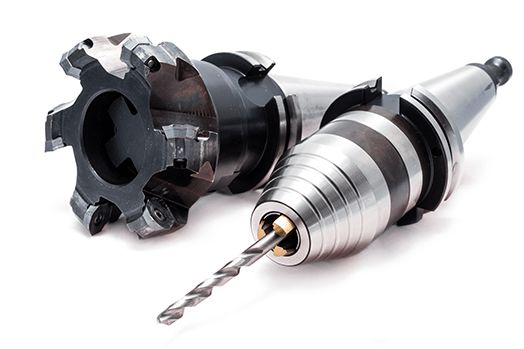
- Setup: In this step, the material (metal, plastic, etc.) is placed on the CNC machine’s bed or fixture, and the necessary cutting tools (like end mills and drills) are installed. The machine is then calibrated to ensure precise alignment and correct positioning of the tool and material.
- Milling: With everything set up, the CNC machine follows the programmed instructions to begin cutting the material. The machine uses rotating cutting tools to remove material in small, controlled increments, gradually shaping it into the desired part. Depending on the complexity, this can include drilling, cutting, shaping, and smoothing. The process ensures the part has the correct geometry and surface finish.
Best CNC Milling Services in the US
Finding the right CNC milling service provider directly impacts part quality, production timeline, and budget. The right partner can and should support tight tolerance, rapid design changes, and production that can scale.
For this comparison, we evaluated each company based on core CNC milling capabilities, including supported materials, achievable tolerances, surface finishes, typical lead times, and scalability from prototype to production. We also considered additional manufacturing services and certifications that support long-term production needs.
Below is a comparison of some of the best CNC milling companies in the United States to help you identify the right fit.
1. Quickparts

Year founded: 1990
Headquarters: Seattle, Washington
Quickparts specializes in custom CNC milling services, offering precision machining for both prototyping and full-scale production. With over 35 years of experience, the company combines in-house capabilities with a global supplier network to ensure the efficient delivery of high-quality parts. They offer a wide range of CNC milling options, including 3-, 4-, and 5-axis milling, with tight tolerances down to ±0.001.
Quickparts supports a variety of materials, including metals such as stainless steel, aluminum, and brass, as well as engineering plastics like ABS, polycarbonate, and nylon. Their QuickQuote® platform provides instant pricing and lead-time estimates, helping you move quickly from design to production.
As an ISO 9001:2015-certified, ITAR-registered company, Quickparts is trusted by industries including aerospace, medical, automotive, and industrial. The company ensures high-precision parts with fast turnaround times, offering both prototyping and high-volume production capabilities under strict quality control.

CNC milling capabilities:
-
- Prototyping: Fast-turnaround CNC milling for prototypes, producing high-quality parts with tolerances down to ±0.001.
- High-Volume Production: CNC milling for large-scale production with consistent quality and on-time delivery for industries like aerospace, medical, and automotive.
- Materials Supported: Wide range of materials, including metals like stainless steel, aluminum, titanium, brass, and plastics such as ABS, nylon, POM, and polycarbonate.
- Advanced Milling Techniques: 3-, 4-, and 5-axis CNC milling for intricate shapes and multi-face machining.
- Surface Finishes: Options for bead blasting, electro-polishing, vapor polishing, and heat treatment for both functional and cosmetic needs.
- Tolerances: Precision machining with tolerances as tight as ±0.001.
Other manufacturing and production services:
-
- Injection molding: Offers prototype-to-production molding with in-house steel or aluminum tooling, including DFM review and options for inserts, overmolds, multi-cavity, and hot runners.
- Stereolithography (SLA): Produces high-resolution photopolymer parts ideal for fit, form, and early functional testing.
- Selective laser sintering (SLS): Builds durable nylon components without support structures, ideal for complex geometries and rapid prototyping.
- Cast urethane: Replicates production-like parts in low volumes using silicone molds and urethane resins, making it an excellent choice for low-volume molded parts.
- Investment casting patterns: Prints lightweight, stable QuickCast patterns for metal casting in aerospace and industrial applications.
- Direct metal printing (DMP): Manufactures high-density metal parts directly from CAD using powder-bed fusion for intricate, durable geometries.
- Sheet metal fabrication: Cuts, bends, and assembles custom enclosures, chassis, and brackets with tight tolerances and production-grade finishes.
- Die casting: Delivers aluminum and zinc castings with consistent dimensions and clean surfaces using both hot- and cold-chamber processes.
- Rapid prototyping: Provides fast-turn prototypes using both additive and traditional methods to validate designs and iterate quickly.
2. Astro Machine Works

Alt text: Astro Machine Works logo /File name: Astro-machine-works-logo.png
Year founded: 1984
Location: Ephrata, Pennsylvania
Astro Machine Works provides CNC machining services that use computer control to run milling, turning, and related operations. The company operates a machining facility in Pennsylvania with multi-axis equipment and CAD/CAM workflows for regulated and technical applications, including 5-axis machining and milling for complex geometries and tight tolerance work. The team supports both prototyping and production parts across aerospace, defense, medical, electronics, and energy.

CNC milling capabilities:
-
- 5-axis machining and milling: Cuts complex geometries in a single setup by machining from multiple angles.
- Tight-tolerance machining: Supports parts that require strict dimensional control and consistent surface finish.
- CAD/CAM-driven toolpaths: Uses CAD/CAM workflows to program machining steps and optimize toolpaths.
Other manufacturing and production services:
-
- Waterjet cutting: Cuts metal and other materials using an abrasive waterjet to avoid heat-affected zones.
- Custom machine building: Builds custom machinery and automation systems, including fabrication, machining, wiring, and assembly.
- Panel wiring and controls: Designs and wires control panels and integrates PLC and safety systems.
3. eMachineShop

Year founded: 1999
Location: Mahwah, New Jersey
eMachineShop provides online CNC manufacturing services for metal and plastic parts, including milling and turning, with options for prototypes and production runs. Customers can upload CAD files (STEP, IGES, DXF, SLDPRT, STL, and others) to request pricing, or use eMachineShop’s free CAD software to create designs and generate quotes. The platform supports a broad range of materials and offers related services, including sheet metal fabrication, 3D printing, injection molding, surface finishing, and secondary processes such as tapping, bending, and countersinking.
CNC milling capabilities:
-
- 3-axis CNC milling: Produces prismatic parts with flat faces, pockets, slots, and drilled features.
- Prototype and production milling: Supports single parts, short-run prototypes, and full production orders.
- Material range: Mills metals and plastics, including aluminum, steel, stainless steel, titanium, brass, copper, ABS, nylon, acetal, and polycarbonate.
Other manufacturing and production services:
-
- CNC turning: Machines cylindrical parts such as shafts, pins, threads, and bores.
- Sheet metal fabrication: Provides laser cutting, waterjet cutting, bending, tapping, and formed sheet metal parts.
- Injection molding: Produces plastic parts for moderate to higher volume production.
- 3D printing: Manufactures plastic and metal parts for rapid prototyping and low-volume needs.
4. Fictiv

Year founded: 2013
Location: San Francisco, California
Fictiv operates a digital manufacturing platform that connects engineering teams with a managed global network of CNC and fabrication partners, rather than running its own factories. Customers upload CAD files, set requirements, and receive pricing plus automated design-for-manufacturability feedback. Fictiv then routes orders to vetted partners and coordinates quality checks and logistics, while customers track project status in the same system for both prototype and production work.

CNC milling capabilities:
-
- 3-, 4-, and 5-axis CNC milling: Produces prismatic and freeform parts in metals and plastics.
- DFM and tolerance feedback: Provides manufacturability input tied to quoted requirements before production routing.
- Prototype and production routing: Supports one-off prototypes, bridge builds, and ongoing production through its partner network.
Other manufacturing and production services:
-
- 3D printing: Supports FDM, SLS, SLA, PolyJet, and MJF for polymer prototypes and end-use parts.
- Injection molding: Produces molded parts through partner tooling for prototyping and production programs.
- Sheet metal fabrication: Cuts, bends, and forms sheet metal for brackets, enclosures, and structural parts.
5. LS Manufacturing

Year founded: Not stated
Location: Sheridan, Wyoming
LS Manufacturing provides CNC machining and related manufacturing services through production facilities in the US and China. LS Manufacturing works with a broad range of metals and plastics and supports projects that move from early prototyping to higher-volume production across industries such as automotive, aerospace, medical devices, electronics, and industrial equipment.

CNC milling capabilities:
-
- Multi-axis CNC milling: Supports 3-axis and 5-axis milling for complex geometries, thin walls, deep pockets, and multi-face parts.
- Materials range: Machines metals and plastics, including aluminum, steel, stainless steel, brass, copper, titanium, ABS, POM, PC, nylon, and engineering plastics.
- Surface finishes: Provides as-machined finishes and post-processing such as anodizing, powder coating, plating, bead blasting, brushing, and vapor polishing.
Other manufacturing and production services:
-
- Injection molding and insert molding: Manufactures plastic parts using molding processes, with support for molded-in inserts.
- Metal casting: Offers investment casting, sand casting, and pressure casting for complex metal part shapes.
- Sheet metal fabrication: Provides laser cutting, stamping, bending, and welding for formed sheet metal parts and assemblies.
6. PartsBadger

Alt text:PartsBadger logo /File name: Partsbadger-logo.png
Year founded: 2016
Location: Cedarburg, Wisconsin
PartsBadger provides CNC machining services with an online quoting workflow for prototype and production orders. Customers upload CAD files, select requirements during quoting, and receive pricing with optional engineering input for manufacturability and material selection. They support jobs ranging from small prototype runs to larger production volumes and offer documentation upon request under ISO 9001:2015 and AS9100D quality systems.

CNC milling capabilities:
-
- 3-axis CNC milling: Machines prismatic parts with flat faces, pockets, slots, and drilled features.
- 4-axis CNC milling: Adds rotary indexing to machine multiple sides in fewer setups for side features and multi-face parts.
- 5-axis CNC milling: Accesses multiple faces and compound angles in a single setup for complex geometries.
Other manufacturing and production services:
-
- Sheet metal fabrication: Cuts and forms sheet-metal parts, such as brackets and enclosures.
- Injection molding: Produces molded plastic parts and tooling for production programs.
- 3D printing: Produces prototype parts for design validation and iteration.
7. Protolabs

Year founded: 1999
Location: Maple Plain, Minnesota
Protolabs provides digital manufacturing services that support CNC machining, injection molding, 3D printing, and sheet metal fabrication across prototype and production programs. Customers upload CAD files to receive automated pricing and design-for-manufacturability feedback, then place orders through an online workflow that coordinates manufacturing, inspection, and delivery.
The company operates company-owned facilities and a managed partner network to support different volumes, materials, and compliance requirements, including ISO and ITAR programs.

CNC milling capabilities:
-
- 3-axis CNC milling: Produces prismatic parts, pockets, slots, and flat features for prototypes and low-volume production.
- 5-axis indexed CNC milling: Machines complex geometries and multi-face features with fewer setups.
- Prototype and short-run production: Supports functional prototypes, jigs, fixtures, and lower-volume end-use components.
Other manufacturing and production services:
-
- Injection molding: Produces plastic parts with production-grade resins, using bridge tooling for low to mid-volume runs.
- 3D printing: Builds polymer and metal parts using additive methods such as resin printing and powder-bed fusion for prototypes, fixtures, and end-use components.
- Sheet metal fabrication: Cuts, bends, and forms sheet metal into brackets, enclosures, and structural parts, with standard finishing options.
8. RCO Engineering

Year founded: 1973
Location: Roseville, Michigan
RCO Engineering is a product development and low-volume manufacturing company that supports design, prototyping, testing, and production programs. The company works across automotive, aerospace, and defense applications, with in-house capabilities that include CNC machining, metal stamping and fabrication, injection molding, compression molding, additive manufacturing, tooling, cut-and-sew, molded and milled foam, and assembly.

CNC milling capabilities:
-
- Horizontal milling: Supports large and complex parts with multiple side features, including slots, grooves, and gear profiles, while reducing re-fixturing.
- Vertical milling: Produces detailed components with operations such as drilling, threading, engraving, tapping, and contouring, suited for smaller parts and short runs.
- Multi-axis machining: Uses 3-, 4-, and 5-axis CNC mills to machine complex geometries, curved surfaces, and undercuts from metal and plastic materials.
Other manufacturing and production services:
-
- Injection molding and compression molding: Produces plastic and composite components for prototyping and low-volume production programs.
- Metal stamping and fabrication: Forms and fabricates metal parts for brackets, structures, and assemblies.
- Additive manufacturing: Builds prototypes and low-volume parts using 3D printing workflows.
9. Renovo CNC

Alt text: Renovo CNC logo /File name: Renovo-cnc-logo.png
Year founded: Not stated
Location: Redwood City, California
Renovo CNC is an online machine shop in Redwood City, California, that provides CNC milling services through an instant quoting workflow. Customers upload a CAD model, choose material, tolerances, surface finish, and delivery options, then place an order through the same portal. Parts are manufactured in-house rather than outsourced.

CNC milling capabilities:
-
- Online CNC milling: Upload a CAD model to configure material, tolerances, surface finish, and delivery options through an instant-quote workflow.
- In-house milling: Produces custom-milled parts at Renovo CNC’s own facility, with parts manufactured under one internal process.
- Part configuration support: Select quantities and machining requirements during quoting so the shop can machine to the specified tolerances and finish.
Other manufacturing and production services:
-
- Design and engineering support: Provides CAD design assistance and finite element analysis to support part development before machining.
- Assembly services: Assembles machined components into subassemblies or finished parts as part of a single production workflow.
- Testing and fixtures: Builds and uses custom fixtures for functional testing and validation of machined components.
10. The Federal Group USA

Year founded: 1980
Location: Bingham Farms, Michigan
The Federal Group provides custom metal manufacturing and supply chain services that support parts and assemblies from prototype through production. Services include CNC machining, metal forming, casting, forging, and fabrication, with engineering coordination, quality control, and logistics managed to deliver build-to-print components for industrial, medical, electronics, and equipment applications.

CNC milling capabilities:
-
- Multi-axis CNC milling: Supports 3-axis, 4-axis, and 5-axis milling for complex geometries and multi-face machining.
- Tight-tolerance machining: Produces parts to specified dimensional and geometric tolerances using controlled CNC processes.
- Material range: Machines aluminum, steel, stainless steel, titanium, brass, and other engineering metals.
Other manufacturing and production services:
-
- Metal fabrication: Provides welding, stamping, bending, forming, spinning, cutting, and finishing for custom metal parts.
- Castings and forgings: Supports production components using casting and forging processes.
- Assembly services: Assembles metal components into finished or semi-finished assemblies ready for integration.
11. Uptive

Year founded: 2016
Location: Libertyville, Illinois, US
Uptive provides CNC machining, rapid prototyping, additive manufacturing, and sheet metal fabrication through a consolidated set of operations created by combining GoProto, RE3DTECH, Phoenix Proto, and Stanfordville Machine. It supports prototype and production part programs with online quoting, manufacturability input, material selection support, and documented quality processes for technical and regulated applications.

CNC milling capabilities:
-
- CNC milling: Runs 3-, 4-, and 5-axis milling centers to produce jigs, fixtures, and functional components in aluminum, stainless steel, titanium, engineering polymers, and composite materials.
- CNC turning: Uses multi-axis lathes and Swiss turning to make shafts, bushings, and small complex parts with slots, grooves, flats, and axial or radial holes for tight-tolerance assemblies.
- Rapid CNC prototyping: Builds large or intricate prototypes directly from CAD data in metals, polymers, and composites, with painted, plated, polished, or clear finish options for appearance and functional evaluation.
Other manufacturing and production services:
-
- Rapid prototyping: Combines CNC machining, 3D printing, sheet metal work, and rapid tooling to support functional prototypes without committing to long-term tooling early in development.
- Additive manufacturing: Offers DMLS, SLS, FDM, SLA, HP Multi Jet Fusion, and PolyJet for plastic and metal parts that need internal channels, lattice structures, or complex geometry.
- Sheet metal fabrication: Cuts, bends, and forms sheet stock into brackets, enclosures, panels, and structural elements for single parts through low-volume batches.
12. Xometry

Year founded: 2013
Location: North Bethesda / Gaithersburg, Maryland, US
Xometry runs a digital manufacturing marketplace that connects engineering teams with a broad network of CNC machine shops and other production suppliers. Customers upload CAD files through the Instant Quoting Engine, review pricing and lead times, and see basic design-for-manufacturability notes before placing machining orders. Prototyping and production orders follow a certified quality system that includes ISO 9001:2015, ISO 13485, IATF 16949:2016, and AS9100D, with ITAR registration for controlled work.

CNC milling capabilities:
-
- CNC milling: Uses 3-, 4-, and 5-axis milling to machine metal and plastic stock into prismatic parts and contoured geometries.
- CNC routing: Produces sheet and plate components with CNC routers for panels, enclosures, fixtures, and other large-format parts in metals and rigid plastics.
- High-volume CNC machining: Scales CNC milling and turning into larger batches so prototype designs to transition into repeat production.
Other manufacturing and production services:
-
- 3D printing: Offers polymer and metal additive processes such as SLS, MJF, FDM, SLA, and related methods for concept models, fixtures, and functional parts.
- Sheet and tube fabrication: Cuts, bends, and forms sheet and tube stock into brackets, frames, and structural parts, with welding and basic finishing when required.
- Injection molding: Produces molded plastic parts using soft or production tooling to move projects from CNC prototypes into higher-volume molded runs.
What to Look for When Choosing a CNC Milling Service
Choosing a CNC milling partner comes down to a few practical checks, which we’ve listed below:
- Precision and tight tolerances: Look for clearly stated standard tolerances, the ability to quote tighter tolerances when needed, and a process for confirming critical dimensions. A solid provider will ask which features are critical, flag risk areas (thin walls, deep pockets, long tools), and explain the realistic tolerance for each material and geometry.
- Modern CNC equipment and technology: Confirm the shop can match your part complexity with the right setup (3-axis, 4-axis, or 5-axis). Ask what CAD/CAM formats they accept, how they handle revisions, and if they provide design-for-manufacturability feedback before cutting metal. If your part needs fewer setups, you usually get better repeatability and fewer compounding errors.
- Machinist expertise and quality control: Check how inspections happen: in-process checks, final inspection, and optional documentation like first article inspection (FAI) or CMM reports. Good quality control is a system, not a promise, so ask what gets measured, how often, and how nonconforming parts get handled.
- Custom manufacturing capabilities: Ensure they can handle your material and finish requirements, plus secondary operations such as tapping, reaming, inserts, engraving, deburring, and basic assembly. If you need a mix of milling and turning, or complex fixturing, confirm they can run the full workflow without sending the job to multiple vendors.
- Quick turnaround time: Speed is useful only if the delivery date is reliable. Ask how lead times are set, what causes slip-ups (material availability, programming queue, finishing backlog), and if they offer expedited options. A good sign is when they separate prototype and production lead times and explain both.
- Budget reliability: Look for pricing that stays stable after quoting. Ask what can trigger changes (tolerance tightening, material substitutions, design revisions, added inspection, finishing changes) and how they communicate those changes. A clear quote should spell out assumptions, include processes, and what counts as an extra.
Partner With the Best CNC Milling Service in the US
Choosing a CNC milling partner shapes how confidently you can move from design to real, production-ready parts. The right provider should provide clear insight into tolerances, surface finishes, and material behavior before you commit to major manufacturing decisions.
Quickparts structures its CNC milling services so teams can validate designs using parts made with production-grade processes, not simplified samples. You can begin with a small prototype run and continue with the same workflow as quantities increase, revisions are introduced, or additional components are added. There is no need to change vendors as requirements evolve.
Each project includes a design-for-manufacturability review, helping identify machining constraints, tolerance risks, and feature trade-offs early in the process. This reduces rework, shortens iteration cycles, and aligns expectations before production begins.
With established CNC experience and a global manufacturing network, Quickparts supports both early validation and ongoing production without forcing changes in process or tooling strategy.
Ready to evaluate your next design with CNC-milled parts that reflect real manufacturing conditions?
Get a free quote from Quickparts today.
CNC Milling Service FAQs
How much does CNC milling cost per hour?
CNC milling costs vary widely and are usually priced as a flat rate rather than an hourly rate for customers. Pricing depends on factors such as part geometry, material type, tolerance requirements, number of setups, tool wear, programming time, inspection needs, and order volume. More complex parts, tighter tolerances, and harder materials generally increase cost, while repeat production and simplified designs reduce it.
What is the difference between CNC machining and milling?
CNC machining is a broad category that includes multiple computer-controlled subtractive processes such as milling, turning, drilling, and boring. CNC milling is a specific type of CNC machining in which a rotating cutting tool removes material from a stationary workpiece to create flat surfaces, pockets, contours, and complex geometries.