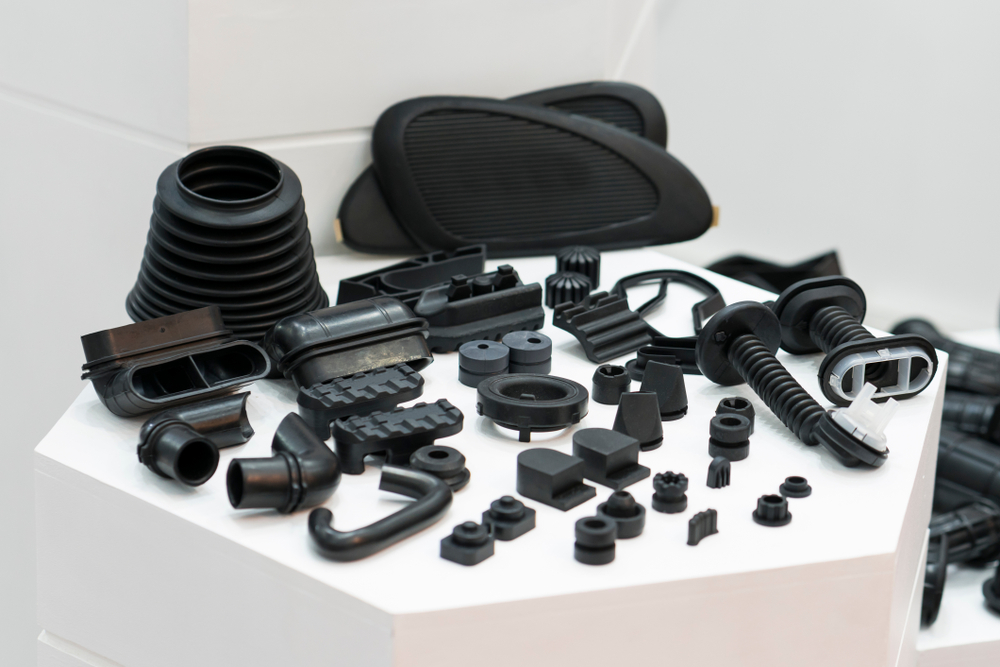
The urethane casting service that’s bridging the gap between quality parts and affordable production
Urethane casting is the ideal solution for moving from prototype to production without the high cost and long lead times of hard tooling.

 ITAR Registered
 ISO 9001:2015






Urethane casting is the ideal solution for moving from prototype to production without the high cost and long lead times of hard tooling.
Whether you need rigid rubber or tough, impact-resistant plastics, we’ve got you covered. Our cast parts meet the highest industry standards for durability and performance.
Ditch the slow, expensive process of traditional steel tooling. By combining 3D-printed master patterns with rapid silicone molding, we deliver your parts in days, not months.
With over 35 years of expertise, we manage material shrinkage and thermal expansion to ensure consistent dimensions across your entire batch. This process is perfect for small batches, bridging the gap between initial prototypes and full-scale production with flawless, color-matched, or painted finishes.
We offer a wide range of production-grade resins designed to mimic the properties of traditional thermoplastics. Our material capabilities include:
We offer multiple finishing options to match functional, cosmetic, and end-use requirements for cast urethane parts:
Quickparts provides additional post-processing services to enhance part functionality, appearance, and readiness for end-use or assembly:
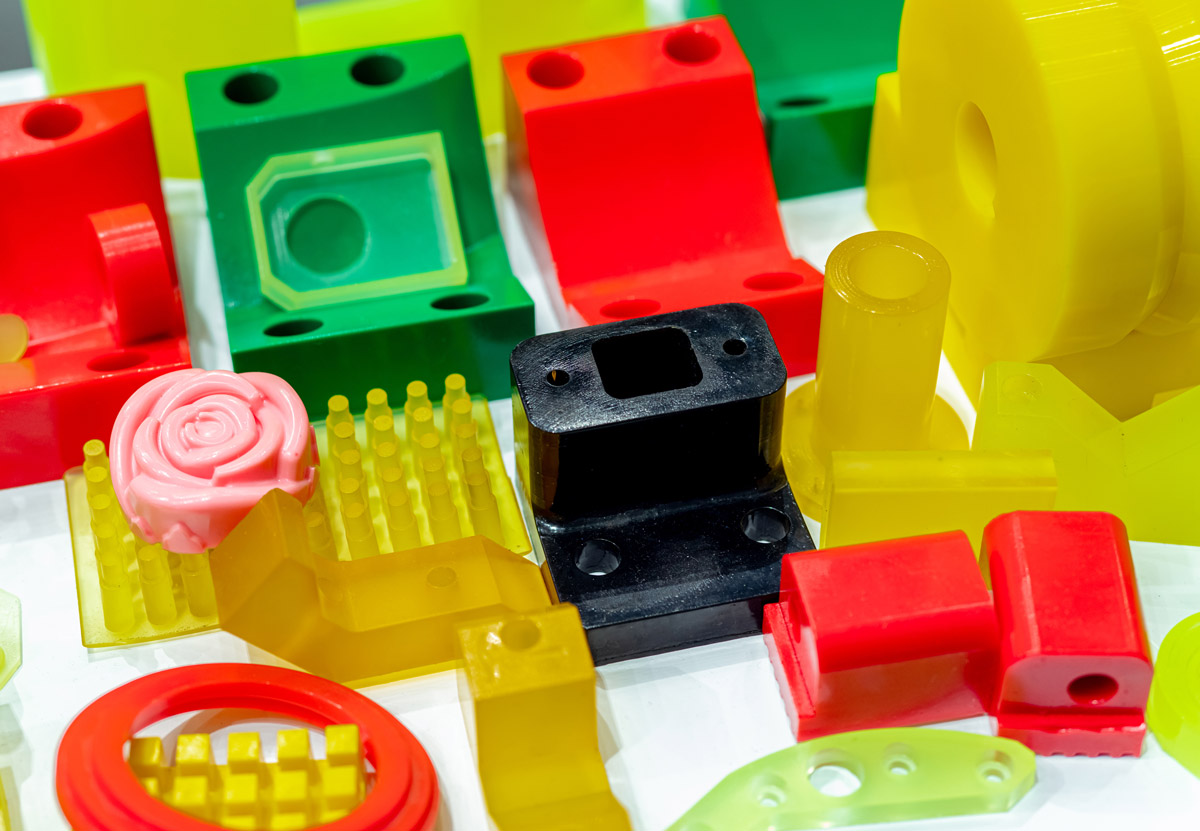
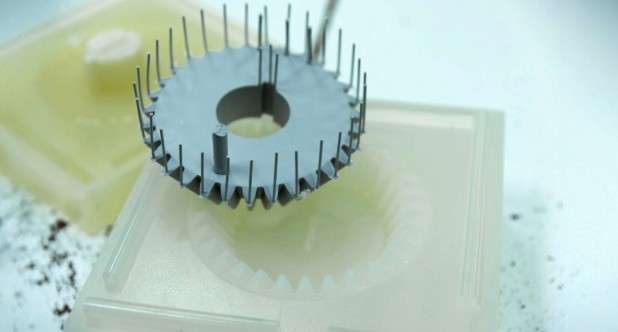
We use additive manufacturing technology to create the master pattern of the desired part. Our SLA printing methods are ideal because they can produce high-resolution parts with a smooth finish. Our hand-finished master pattern ensures the best surface detail.

In this step, we encase our 3-dimensional printed master pattern in silicone. The silicone encapsulates the features of the desired parts. After curing the mold, it is cut perfectly into separate halves. We then remove the master pattern.

Mixed urethane resin is poured into the silicone mold, filling the cavity completely. Once cured, the part is removed from the mold and trimmed.
Get your CNC prototypes fast with expert, precise machining.
Urethane casting is a low-volume manufacturing process used to produce high-quality, production-grade parts from silicone molds and polyurethane materials. The process begins with a high-resolution master pattern, typically created using SLA 3D printing and hand-finished to capture fine detail, which is then encapsulated in silicone to form a flexible mold.
Once the mold cures and the pattern is removed, urethane material is introduced and cured under controlled pressure or vacuum, creating accurate parts with consistent dimensions, smooth surface finish, and reliable performance across short production runs.
Urethane casting provides a practical way to produce high-quality parts for low-volume production and early manufacturing needs. The process balances speed, flexibility, and performance, making it well suited for prototypes, bridge production, and short runs.
Design flexibility: Silicone molds capture fine details and complex geometries with consistent results across short runs.
Cast silicone and cast urethane differ primarily in material behavior and typical applications. Cast silicone produces soft, highly flexible parts that perform well across wide temperature ranges, making it suitable for seals, gaskets, and components that require elasticity.
Cast urethane produces rigid to semi-flexible parts with strong mechanical properties, consistent dimensions, and production-ready surface finishes, making it better suited for functional components, housings, and low-volume production parts.
Cast urethane tolerances typically fall within about ±0.015 inches or ±0.003 inches per inch of part length, depending on size and geometry. Small dimensional changes can occur as parts cure due to material behavior and mold flexibility, with a typical shrinkage rate around 0.15%.
Tighter tolerances may be achievable for specific features following design review, and surface finishing or pattern preparation can help preserve detail where precision matters most.
Urethane casting is a great choice when you need production-quality parts in low volumes without committing to full-scale manufacturing. It fits well between 3D printing and injection molding, offering better surface finish, material performance, and consistency than most printed parts while avoiding the tooling investment and setup required for injection molding.
Teams often choose urethane casting for bridge production, pilot runs, and functional testing when speed, appearance, and material behavior matter. The process also works well when designs may still change, since silicone molds and master patterns allow updates without restarting an entire tooling program.