Custom plastic injection molding company

Prototypes and low quantities? Upload your file now.

Get a QuickQuote®
or

High-volume production? Start your inquiry now.

Submit Production Request

Plastic Injection Molding Supplier for Custom Parts

Quickparts’ plastic injection molding services offer a comprehensive suite of solutions, catering to diverse project requirements ranging from rapid prototyping for swift design validation, up to volume production runs, accommodating geometrically complex parts.
With 35 years of experience and an in-house network of global manufacturing facilities, we specialize in plastic injection molding—the optimal method for cost-effective mass production of plastic parts. Our process ensures consistent quality across low-to-high-volume manufacturing needs.
What is plastic injection molding?

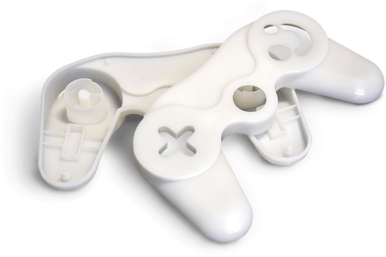
quick molded part

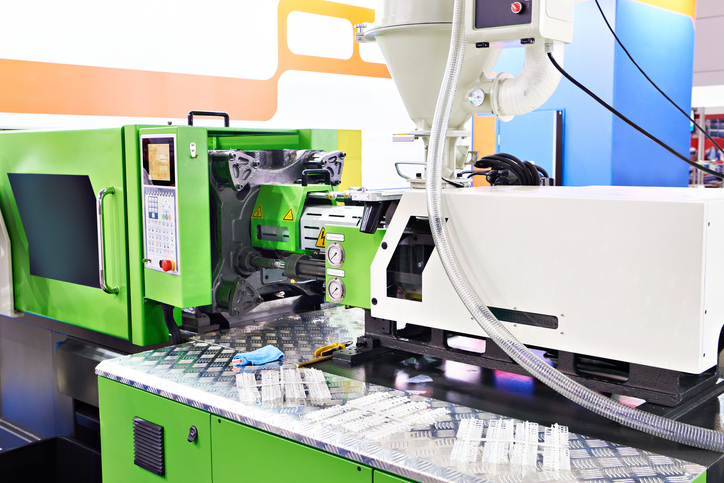
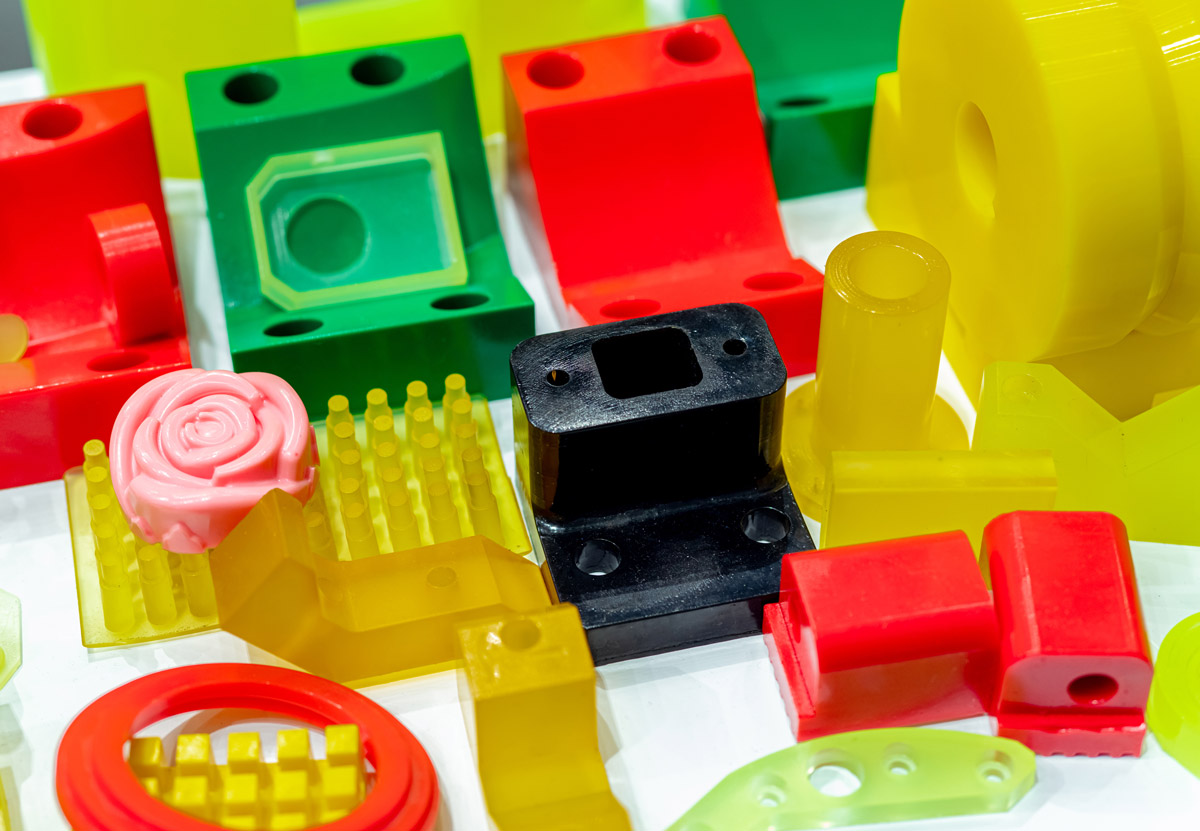
Plastic injection molding is a manufacturing process used to create large quantities of identical plastic parts. Plastic pellets are melted down, injected into a custom-designed mold, and then cooled until solid. The mold acts like a cookie cutter, shaping the melted plastic into the exact form needed.

Once the mold is built, it can produce thousands, or even millions, of parts with consistent quality and tight tolerances. Plastic injection molding is a great option when you:

  • Need a large number of identical parts fast
  • Want strong, functional plastic components with smooth surface finishes
  • Care about keeping part costs low once the mold is made

It’s commonly used across industries like automotive, consumer products, medical devices, and electronics. If you need precise, durable plastic parts at scale, plastic injection molding can help you get there.

As a qualified plastic injection molder, we offer a range of advanced molding techniques, including:

quick molded part

Plastic injection molding is a manufacturing process used to create large quantities of identical plastic parts. Plastic pellets are melted down, injected into a custom-designed mold, and then cooled until solid. The mold acts like a cookie cutter, shaping the melted plastic into the exact form needed.

Once the mold is built, it can produce thousands, or even millions, of parts with consistent quality and tight tolerances. Plastic injection molding is a great option when you:

  • Plastic Injection Molding:

    Creates high-volume, identical plastic parts.

  • Overmolding:

    Enables creation of multi-material components with distinct properties.

  • Stack Molding:

    Produces multi-level injection molded parts through stacked mold faces.

  • Hot Runner Molds:

    Optimizes cycle times and minimizes material waste.

  • Insert Molding:

    Integrates metal or other inserts for enhanced strength or functionality.

  • Highly Intricate Tooling:

    Produces parts with complex geometries and tight tolerances.

  • Multi-Cavitation Tooling:

    Increases production efficiency by creating multiple parts per cycle.

It’s commonly used across industries like automotive, consumer products, medical devices, and electronics. If you need precise, durable plastic parts at scale, plastic injection molding can help you get there.

Plastic Injection Molding Materials & Finishes

Materials

Quickparts supports most commercially available thermoplastics to match your design, mechanical, and environmental requirements. If you’re unsure about strength, flexibility, chemical resistance, or surface appearance, our experts can help you choose the right material for your project.

Plastic materials include:

  • ABS (Acrylonitrile Butadiene Styrene)
  • ABS + PC (ABS + Polycarbonate)
  • Acetal (POM)
  • Acrylic (PMMA)
  • LCP (Liquid Crystal Polymer)
  • PA–Nylon 6 (Polyamide)
  • PA–Nylon 6/6 (Polyamide)
  • PA–Nylon 11 (Polyamide)
  • PBT (Polybutylene Terephthalate)
  • PC (Polycarbonate)
  • PEI (Polyetherimide)
  • PE (Polyethylene)
  • LDPE (Low Density Polyethylene)
  • HDPE (High Density Polyethylene)
  • PET (Polyethylene Terephthalate)
  • PP (Polypropylene)
  • PPA (Polyphthalamide)
  • PPS (Polyphenylene Sulfide)
  • PS (Polystyrene)
  • HIPS (High Impact Polystyrene)
  • PSU (Polysulfone)
  • PU (Polyurethane)
  • PVC (Polyvinylchloride)
  • PVDF (Polyvinylidene Fluoride)
  • SAN (Styrene Acrylonitrile)
  • TPE (Thermoplastic Elastomer)
  • TPU (Thermoplastic Polyurethane)

Finishes

Our industry-standard Mold-Tech (MT)™ finishes are widely specified to ensure global consistency, offering an extensive catalog of defined textures that can be matched across tooling and production. These finishes range from high-gloss polishes to matte textures, each influencing the appearance and tactile feel of the final part. Texturing also plays a functional role—helping to conceal flow lines or surface imperfections and enhancing grip where needed. Common techniques include EDM, bead blasting, and chemical etching, which can replicate a wide variety of patterns, from fine leather grains to rugged stone-like surfaces.

Injection Molding Applications & Products

How Does Plastic Injection Molding Work?

01

Initial meeting with plastic injection molding experts

We start every project by learning your goals, timelines, and product requirements. Our team can work with you to understand the best approach for materials, tolerances, and tooling options. We’re experienced in developing prototypes, scaling production, and reworking existing parts.

02

Robust manufacturing analysis

Before we quote or build, our engineers run a detailed manufacturability analysis to spot risks early, like sink marks, draft angles, or gating issues. This helps us make sure your part is optimized for the chosen mold type and production volume. It also reduces the need for costly rework down the line.

03

Complete program review

Once the analysis is done, we meet with you to confirm every detail on part specs, volumes, tool design, finishing requirements, and delivery timelines. Our quote reflects exactly what you need, and we treat it like a production blueprint, not just a number.

04

First Article Inspection and quality review

Before full production begins, we mold your first parts and conduct a First Article Inspection (FAI) against all dimensional, material, and performance specs. You receive the initial samples to review and approve. If adjustments are needed, we fine-tune the tool before moving forward

05

Production and delivery

Once the FAI is approved, we move into production. We monitor quality throughout the process and provide ongoing updates on part status and delivery. Parts are packed and shipped according to your logistics needs.

06

A complete partnership

We support you beyond the first delivery. We offer ongoing engineering support, secondary services, and tooling maintenance. If you need to make changes to the part, switch materials, or scale volume, we’re here to help you adapt.

Connect with a Plastic Injection Molding Specialist – Get Your Free Online Quote

Name(Required)
This field is for validation purposes and should be left unchanged.

Plastic Injection Molding FAQs

What is plastic injection molding?

Plastic injection molding is a manufacturing process used to make high volumes of plastic parts. It works by melting plastic pellets until they become liquid, then injecting that liquid into a metal mold where it cools and hardens into the final shape. This method is used for everything from bottle caps to car bumpers because it’s fast, repeatable, and works with many types of plastic.

How does plastic injection molding work?

How does plastic injection molding work?

Is plastic injection molding difficult?

It can be complex to start from scratch, but when you work with an experienced partner like Quickparts, the process is straightforward. The challenging parts, like designing the mold, picking the right material, and controlling temperatures, are handled by our trained engineers with decades of experience. All you need to do is share your part design and volume needs, and we manage the rest for you.

What plastic is used in injection molding?

A wide variety of plastics can be used, depending on what the part needs to do. Common options include ABS for strength and impact resistance, polypropylene for lightweight and flexible uses, and polycarbonate for strong and transparent needs. Some materials are better for heat resistance, others for chemical exposure, and some are chosen for their finish or color.

If you’re overwhelmed by the options, our team can help you narrow down the best one for your part based on its end use.